what is the kitchen work triangle rule? Well, it’s basically this simple idea: your fridge, stove, and sink should form a kind of triangle in your kitchen. The point is to make moving around while cooking easier and faster, so you’re not constantly running back and forth or bumping into stuff. It’s one of those …


what is the kitchen work triangle rule? Well, it’s basically this simple idea: your fridge, stove, and sink should form a kind of triangle in your kitchen. The point is to make moving around while cooking easier and faster, so you’re not constantly running back and forth or bumping into stuff. It’s one of those old-school design tricks that’s been around for decades, but honestly, it still works. Even with modern kitchens getting bigger and more multi-purpose, following this triangle idea helps keep things flowing, saves a bit of energy, and just makes cooking feel less like a chore.
What Is the Kitchen Work Triangle Rule?
The kitchen work triangle rule is really just a simple idea. Imagine your fridge, stove, and sink forming a triangle in your kitchen. The goal is to make cooking smoother so you’re not walking a million steps between things or knocking into counters all the time. If you set it up right, it makes meal prep faster, less tiring, and honestly, just more fun. Think of it like an invisible guideline that keeps your main work areas within easy reach. It’s all about efficiency, reducing unnecessary movement, and making your kitchen feel organized and comfortable.
Origins of the Kitchen Triangle
This idea isn’t some new fad it goes way back to the 1940s. Lillian Gilbreth, a smart engineer and motion study pioneer, noticed that people wasted tons of steps in kitchens. She came up with ways to plan layouts so cooks could move less and work smarter, not harder. Later, principles from Taylorism helped make this the “standard” way to think about kitchen efficiency. Over time, this concept became a classic in kitchen design because it just… works. People realized it wasn’t just theory following it really did make daily cooking smoother and less stressful.
Why It Still Matters Today
Even though kitchens are way bigger now, and families do way more in them than just cooking, the triangle still matters. Modern kitchens are often multi-functional think work-from-home spots, breakfast nooks, or even mini play areas for kids. Having your fridge, stove, and sink arranged smartly helps keep everything flowing, so multiple people can move around without bumping into each other. It’s like giving your kitchen an ergonomic flow it makes life easier, saves energy, and honestly, makes cooking a lot less annoying. Even in open-concept spaces, the triangle idea can guide where you put things so the layout just feels natural.
How to Measure the Kitchen Work Triangle
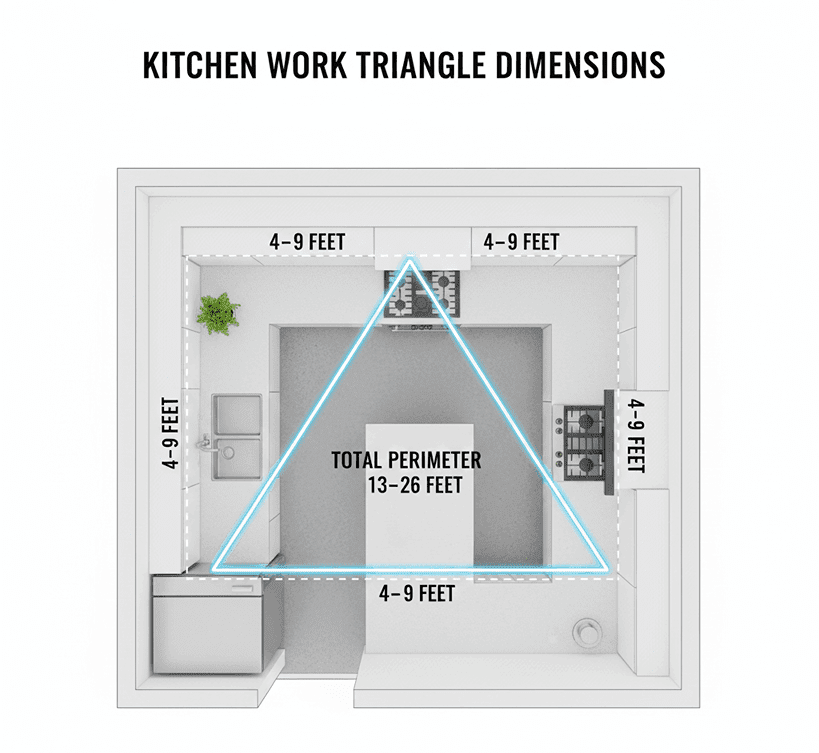
Measuring your kitchen triangle isn’t rocket science, but getting it right can make a huge difference. The idea is to make sure your fridge, stove, and sink are close enough to reach easily, but not so close that you feel cramped. A few simple rules can help keep your kitchen efficient and comfortable. You could even grab a tape measure and walk the steps yourself to see how it feels.
Triangle Dimensions
Here’s the basic guideline most designers follow:
- Distance between each point (sink, stove, fridge): 4–9 feet (1.2–2.7 meters)
- Total perimeter of the triangle: 13–26 feet (4–7.9 meters)
- Avoid obstacles: Nothing tall or bulky should block the paths
- Minimize traffic: Keep the main cooking area clear so people don’t bump into each other
These numbers come from NKBA kitchen guidelines, but honestly, feel free to tweak a little depending on your kitchen size. The point is comfort and smooth movement, not being a strict rule follower.
Tips for Smooth Workflow
Even if your triangle fits the numbers, there are a few things you can do to make life easier:
- Prep space near the stove: Chopping and cooking stuff should be right there, so you’re not carrying ingredients across the room.
- Store utensils and pots close: Keep everything within reach, no hunting for spoons or pans mid-cook.
- Fridge near prep area: Makes grabbing ingredients faster and less annoying.
Other small tricks: leave some clear landing space near the sink or stove, reduce unnecessary steps, and keep things you use most often easy to grab. It all adds up to a kitchen that actually feels nice to work in.
Applying the Triangle in Different Kitchen Layouts
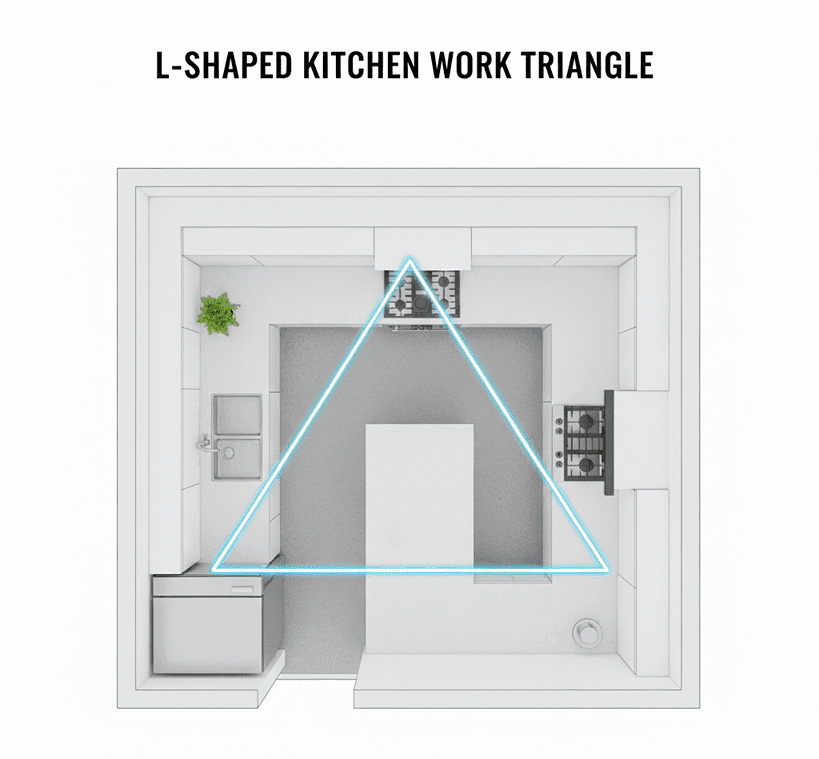
Now that you know the basics of the triangle and how to measure it, let’s see how it works in different kitchen shapes. Every layout is a little different, so you gotta tweak the triangle to fit. Don’t stress too much think of it as a guideline, not a rule written in stone.
L-Shaped Kitchen Triangle
In an L-shaped kitchen, the fridge, stove, and sink usually sit along the two walls forming the “L.” This works well because it keeps the triangle compact but still gives you enough room to move.
Tips:
- If you’ve got a corner cabinet, don’t let it block your flow use pull-out drawers or lazy Susans.
- Islands are great here, but make sure they don’t cut across your main triangle path. They should add workspace, not obstacles.
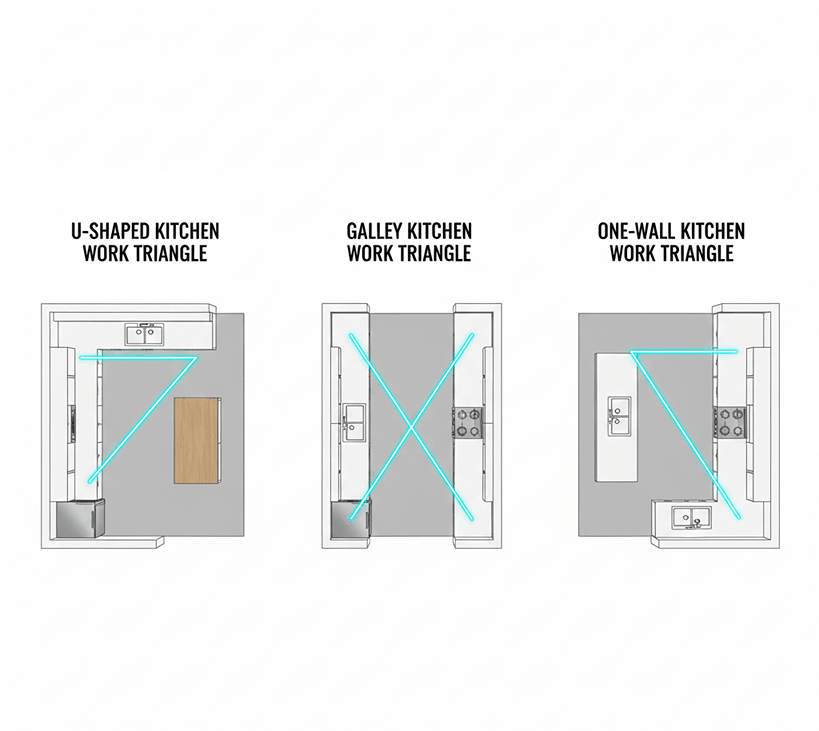
U-Shaped Kitchen Layout
The U-shaped kitchen gives you plenty of counter space and makes the triangle super efficient. You can put the fridge on one end, the sink in the middle, and the stove at the other side.
Tips:
- Keep traffic out of the triangle this layout works best when only one person is cooking at a time.
- If you have multiple cooks, consider making mini-triangles for each person so nobody bumps into each other.
Galley & One-Wall Kitchens
These are tricky because space is tight or linear. The triangle might get stretched, but you can still follow the principles: keep the fridge, sink, and stove within reasonable reach.
Tips:
- In galley kitchens, try to keep the fridge at one end, stove at the other, and sink in the middle this keeps steps minimal.
- One-wall kitchens often need creative storage and landing space to make the workflow smooth.
Kitchen Island Work Triangle
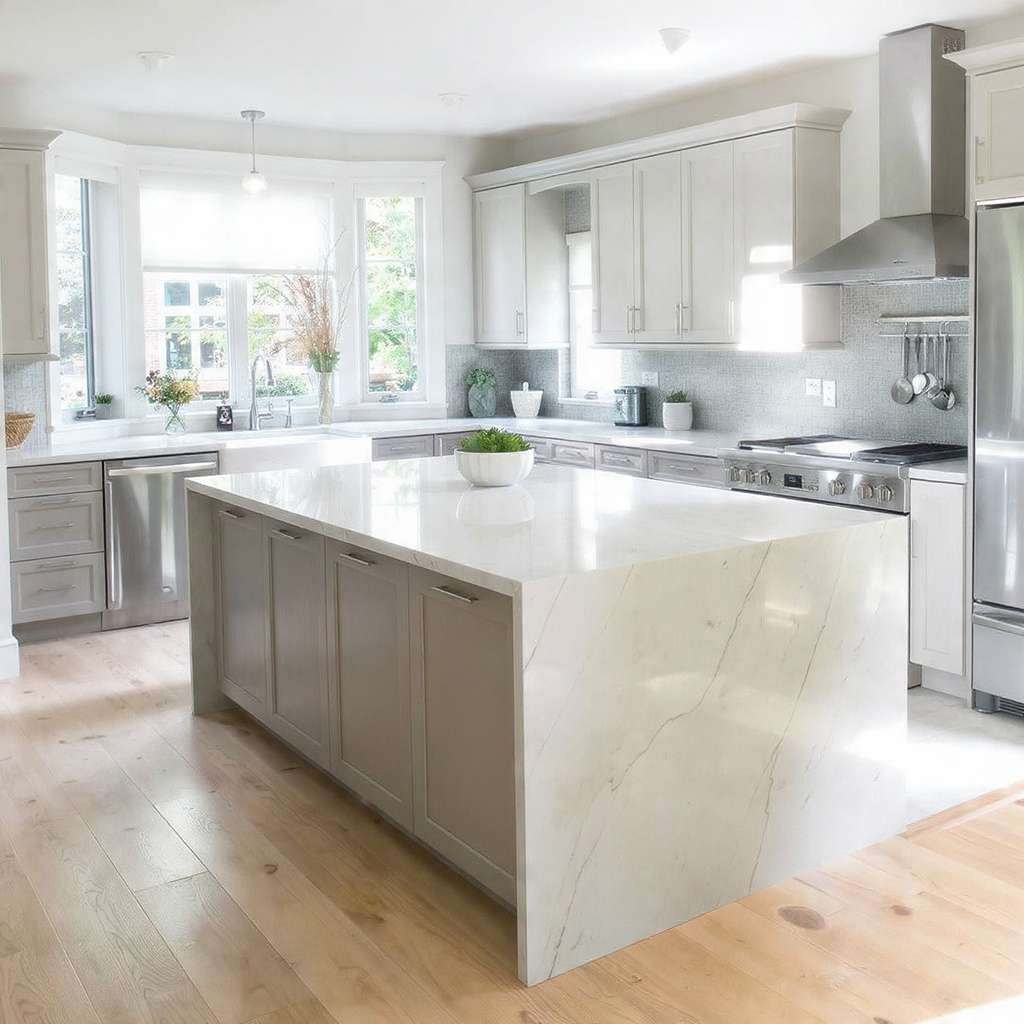
Islands are awesome they can add counter space, extra storage, and even another work station but they can also mess with the triangle if you’re not careful.
Tips:
- If your sink or stove is on the island, make sure the triangle path around it stays open.
- Use islands for prep or chopping, and try not to place obstacles that force you to zigzag across the kitchen.
Work Triangle vs Work Zones – What’s Better?
The kitchen work triangle has been around forever, but modern kitchens aren’t what they used to be. Bigger spaces, multiple cooks, islands, and extra appliances mean the classic triangle sometimes feels a little… limiting. That’s where the kitchen work zone concept comes in. Instead of thinking in just three points, you divide your kitchen into zones: food storage, prep, cooking, cleaning, and even serving. This can make multitasking easier and helps keep traffic smooth.
Here’s a quick comparison so you can see the difference between zoning vs triangle:
| Feature | Work Triangle | Work Zones |
| Best for | Small to medium kitchens with one main cook | Large or multi-cook kitchens, open-concept layouts |
| Movement | Focused on fridge, stove, sink; minimizes steps | Separate zones for different tasks; multiple people can work without bumping |
| Flexibility | Less flexible with modern layouts | Highly adaptable, can include islands, extra sinks, and appliances |
| Setup | Simple and easy to plan | Needs careful planning and more space |
| Traffic Flow | Works if kitchen isn’t crowded | Handles multiple cooks and zones better |
If you’ve got a smaller kitchen or just cook alone most of the time, the triangle works like a charm. But for modern kitchen layout ideas, especially big open spaces or family kitchens, zoning can make life a lot easier. It’s all about what fits your space and how you actually use your kitchen day-to-day.
Common Mistakes and How to Avoid Them

Even though the kitchen work triangle is a simple idea, people still mess it up all the time. Here are the most common mistakes and some quick tips to fix them:
- Triangle too cramped: If your fridge, stove, and sink are too close, you’ll feel boxed in and bump into stuff. Tip: Leave at least 4 feet between each point so you’ve got space to move.
- Too far apart: Walking forever between fridge, sink, and stove kills your workflow. Tip: Keep the total triangle perimeter under 26 feet, so everything’s reachable without tiring yourself out.
- Traffic interference: Placing the triangle in a busy walkway is a recipe for chaos. Tip: Try to route the main path around, not through, your main cooking zone.
Small tweaks like putting prep space near the stove, keeping utensils handy, and clearing clutter can make a huge difference. These little adjustments reduce congestion and make your kitchen a functional layout that actually works in real life.
FAQs
Is the kitchen work triangle outdated?
Not really. Sure, kitchens today are bigger and more multi-functional, but the triangle still works as a simple guideline to streamline workflow. Even in modern homes, it helps keep things efficient and reduces unnecessary steps. Think of it as a foundation you can tweak it with extra zones or islands, but the basic idea still holds.
Does the kitchen triangle still work in modern homes?
Absolutely. Even in open-concept kitchens or spaces with multiple cooks, the triangle concept can guide your layout. You might combine it with work zones, but keeping the fridge, stove, and sink reasonably close still makes cooking and cleaning way smoother.
Can you use it with a kitchen island?
Yep! Islands can either enhance or mess with your triangle. If you place your sink or stove on the island, make sure paths stay clear. Islands are perfect for extra prep space, landing zones, or storage, just don’t let them block the main flow. This keeps the triangle practical and easy to move around.
Small kitchen triangle: how to make it work?
In tight spaces, the triangle can feel squished. Focus on efficient kitchen layout:
- Place fridge, sink, and stove within 4–9 feet of each other
- Use pull-out shelves or corner solutions
- Keep prep space and utensils nearby
Even small kitchens can feel open and ergonomic with a little planning.
Large kitchen triangle layout tips
Big kitchens can stretch the triangle too far, making you walk more than needed. Tips to fix it:
- Add mini work triangles or zones around islands
- Keep frequently used areas close together
- Plan landing spaces near prep, cooking, and cleaning areas
This way, even large or open kitchens stay functional, reduce congestion, and make daily kitchen tasks easier.
Conclusion
There you have it what is the kitchen work triangle rule in a nutshell. It’s all about keeping your fridge, stove, and sink in a triangle so cooking feels smooth, prep is easier, and you don’t waste time walking around like a mad person. Even in today’s bigger, more open kitchens, following the basic principles of the triangle still makes life way simpler and keeps everything ergonomic.
Honestly, I’ve seen kitchens where ignoring the triangle caused chaos once it was fixed, everything just flowed better. A little planning goes a long way, whether you’re working in a cozy galley or a sprawling open-concept kitchen.
By keeping triangle rules in mind, you’re basically nailing kitchen ergonomics, modern kitchen planning, and practical kitchen design all in one go.
If you want to take your layout even further, check out this guide on the 3×4 Kitchen Rule it’s a smart next step for making your kitchen super functional without overthinking it.