If you’re wondering what is the golden rule for kitchen design, here’s the short and honest answer: always put function first, looks second. A kitchen should be easy to move around in, simple to work in, and comfortable to use every single day. If cooking feels smooth and nothing gets in your way, the design …
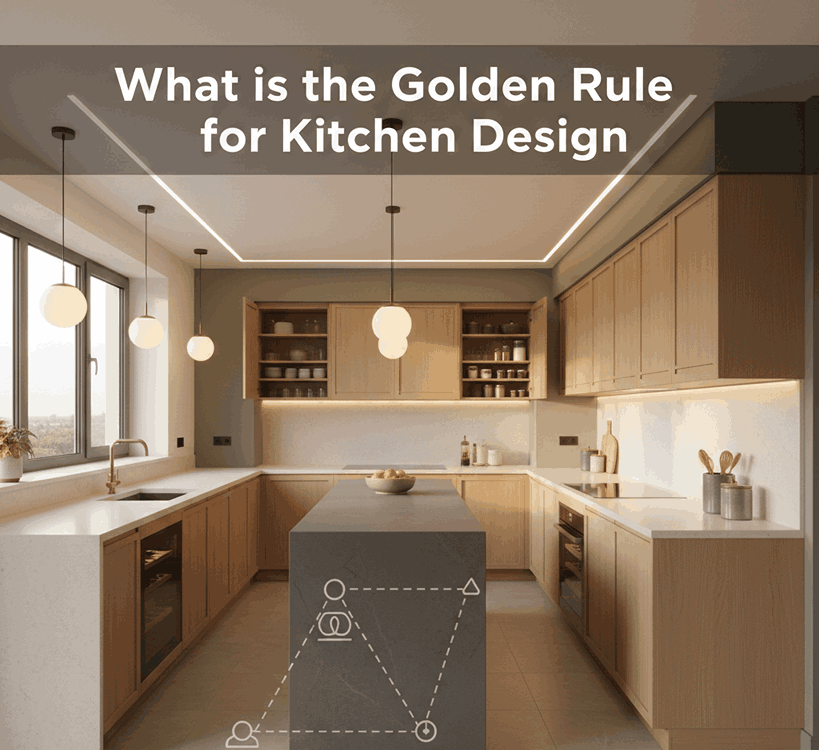

If you’re wondering what is the golden rule for kitchen design, here’s the short and honest answer: always put function first, looks second. A kitchen should be easy to move around in, simple to work in, and comfortable to use every single day. If cooking feels smooth and nothing gets in your way, the design is doing its job. Good flow, smart layout, and daily comfort matter way more than fancy finishes. A kitchen isn’t a showroom. It’s a working space where real life happens, meals get cooked, messes get made, and time gets spent. When it works well, everything else just falls into place.
What Does the Golden Rule in Kitchen Design Really Mean?
In simple words, the kitchen design golden rule is about making sure the kitchen works before trying to make it look fancy. That’s it. If you can move easily, reach things without stress, and cook without bumping into stuff, the design is doing its job.
Think about how people actually move in a kitchen. You walk from the fridge to the counter, then to the stove, then back again. This happens every day, sometimes multiple times a day. A functional kitchen design respects that movement instead of blocking it with awkward cabinets or tight spaces.
The kitchen is also one of the most used rooms in a home. It’s not just for cooking anymore. People eat there, talk there, sometimes even work there. So kitchen usability matters a lot more than a shiny finish or trendy colors.
The problem with “pretty only” kitchens is simple. They look amazing in photos, but living with them feels annoying. Drawers hit each other, counters feel cramped, and everything takes extra effort. And honestly, a kitchen that looks great but feels irritating to use isn’t a good kitchen at all.
Why Functionality Always Comes Before Looks
Kitchens Are Used Every Single Day
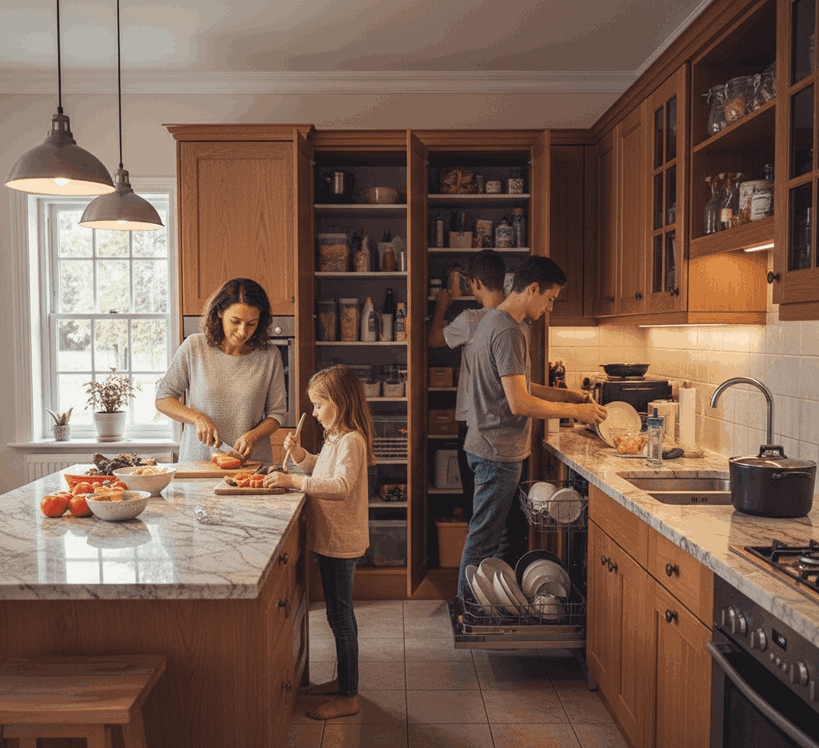
A kitchen isn’t something you use once in a while. It’s part of daily life. You cook there, clean there, grab snacks, make tea, and sometimes just stand there thinking what to eat. Storage, movement, and easy access matter more than people realize.
Small problems can get annoying really fast. A drawer that won’t open fully. Not enough counter space. Cabinets that are too high or too deep. At first, you ignore it. After a few weeks, it starts to bother you. That’s where kitchen functionality and kitchen efficiency really show their value. A practical kitchen layout saves time, energy, and honestly, a lot of frustration.
Good Function Automatically Improves Kitchen Aesthetics
Here’s the funny part. When a kitchen works well, it usually looks better too. Clean counters make the space feel calm. Less clutter makes everything look organized, even if the design is simple.
A smart layout helps hide mess, keeps things in their place, and makes the whole room feel more modern without trying too hard. You don’t need fancy finishes everywhere. When the flow is right and things make sense, the kitchen just feels good to be in.
The Kitchen Work Triangle
What Is the Kitchen Work Triangle Rule?
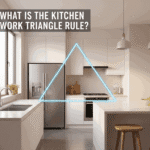
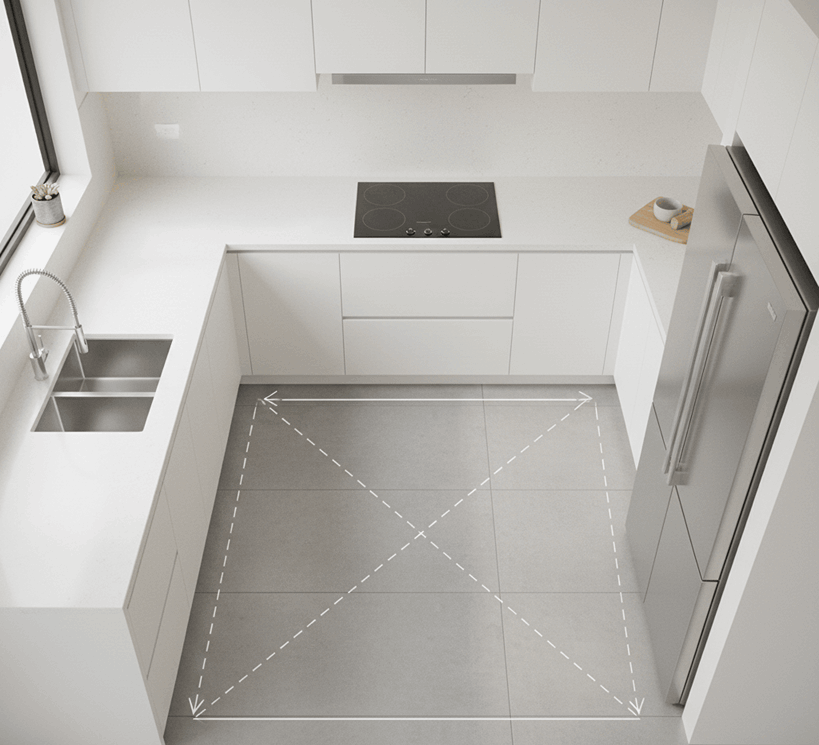
The kitchen work triangle is just a simple way to explain how the kitchen should flow. It focuses on three main spots: the sink, the stove, and the refrigerator. These are the places you visit the most while cooking, without even thinking about it. You grab food from the fridge, wash it at the sink, then move to the stove. When the sink, stove, and refrigerator placement makes sense, cooking feels smooth instead of tiring. No measuring tapes, no complicated math. It’s really about easy walking and natural movement.
How the Work Triangle Improves Kitchen Workflow
When this setup is done right, you take fewer steps and waste less time. You’re not walking back and forth across the room or squeezing past someone every few minutes. It also cuts down on bumping into people, especially when more than one person is in the kitchen. A better kitchen workflow means meals get done faster and with less stress, which honestly makes cooking more enjoyable.
When the Work Triangle Doesn’t Work Perfectly
The work triangle isn’t a strict rule for every home. In small kitchens, space limits how things can be placed. In open kitchens, traffic from other areas can break the flow. Islands in the middle can also change movement patterns. In these cases, the idea still helps, but it needs a little flexibility instead of blind following.
Kitchen Work Zones Explained
Food Preparation Zone
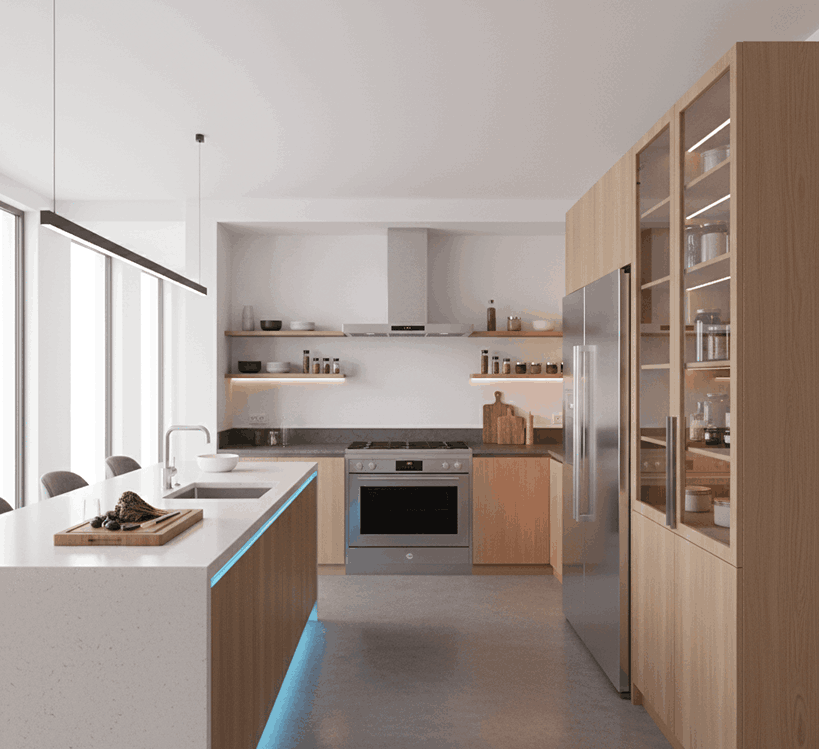
The food preparation zone is where most of the “hands-on” stuff happens. You need enough counter space to chop, mix, and prep ingredients without feeling cramped. Think knives, cutting boards, bowls everything should be within easy reach. If you’re constantly moving across the kitchen just to grab tools, it slows you down and gets annoying fast. A smart prep area makes cooking feel effortless and even kinda fun.
Cooking Zone
Next up is the cooking zone. This is your stove, oven, and any appliances you use to actually cook food. Proper ventilation is a must here no one likes a smoky, stuffy kitchen. Safety matters a lot too; keep flammable things away and make sure you’ve got enough space to move around while stirring, flipping, or lifting pans. A well-planned cooking zone makes meal prep safer and faster.
Storage Zone
Finally, the storage zone. This is your fridge, pantry, and cabinets. Easy access is key — nothing worse than juggling ingredients while digging through a crowded cabinet. Smart organization here keeps your kitchen tidy and reduces the chaos when cooking. Good storage isn’t just about fitting everything in; it’s about making your life simpler and keeping everything you need within a quick reach.
Kitchen Layout Planning That Actually Works
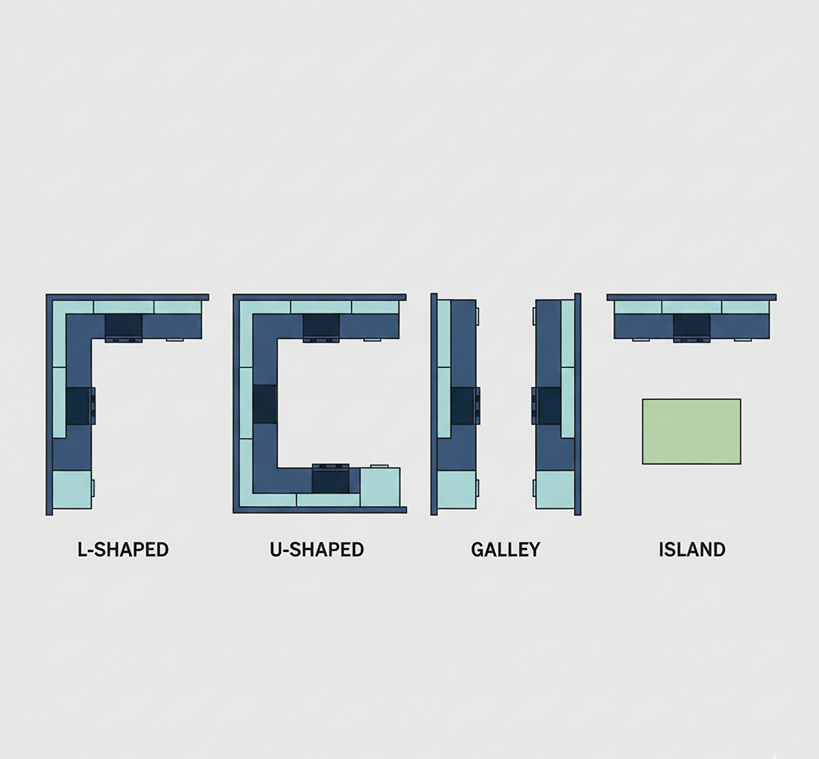
Common Kitchen Layout Types
Here’s a simple way to see which layout fits best:
| Layout Type | Best For | Why It Works |
| L-shaped | Small to medium kitchens | Keeps things flowing naturally |
| U-shaped | Busy kitchens | Tons of counter space for prep |
| Galley | Narrow spaces | Straightforward workflow, easy reach |
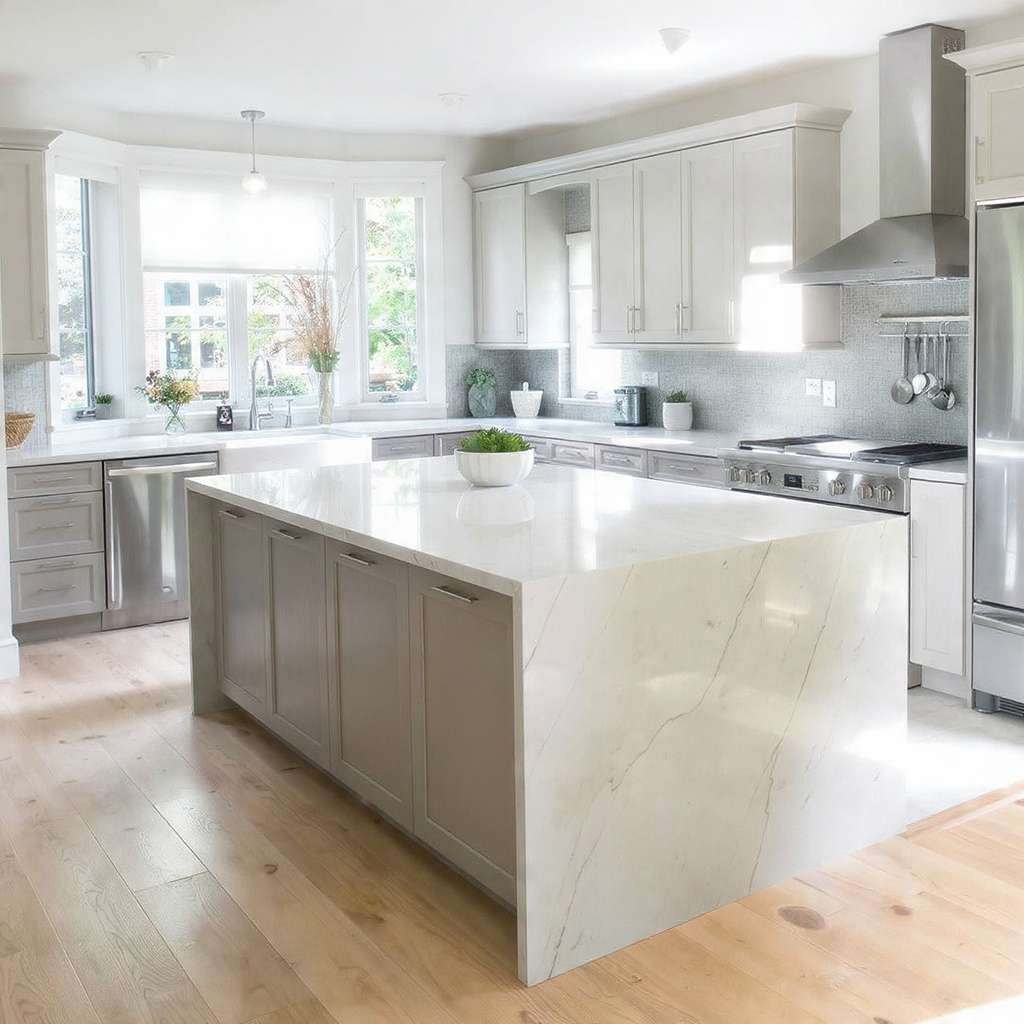
| Island | Open kitchens | Extra prep space and social spot |
Each layout has its own strengths, and picking the right one makes a big difference in how your kitchen feels day-to-day.
Choosing the Best Layout for Your Space
When planning your kitchen, think about the room size first. A cramped space might be perfect for an L-shape or galley, while a bigger room can handle a U-shape or an island. Family size matters too more people in the kitchen means you need more space and smarter kitchen layout planning.
Cooking habits are key as well. If you love baking or meal prepping, you’ll need longer counters and more storage. If you mostly microwave and make quick meals, a simple layout works fine. Smart kitchen space planning keeps traffic smooth and prevents bumping into each other, making every cooking session feel easier and less stressful.
How to Balance Functionality and Aesthetics
Start With Function, Finish With Style
Honestly, if you want a kitchen that actually works, always start with function first. Get your layout right, make sure counters are in the right spots, and plan kitchen work zones properly. Once that’s done, think about materials sturdy counters, durable cabinets, surfaces that don’t stain easily. Colors and decoration should come last. Pick shades and finishes that make the space feel good, but don’t let them get in the way of cooking or moving around.
Modern Kitchen Design Rules That Still Make Sense
Some of the old rules still matter today. Keep things simple with clean lines, so nothing feels cluttered or awkward. Easy-to-clean surfaces are a must trust me, fancy but impossible-to-clean tiles are just asking for trouble. Smart storage solutions like pull-out drawers, deep cabinets, or hidden compartments make your kitchen feel modern and practical at the same time.
Smart Storage Makes or Breaks a Kitchen
Storage Optimization Basics
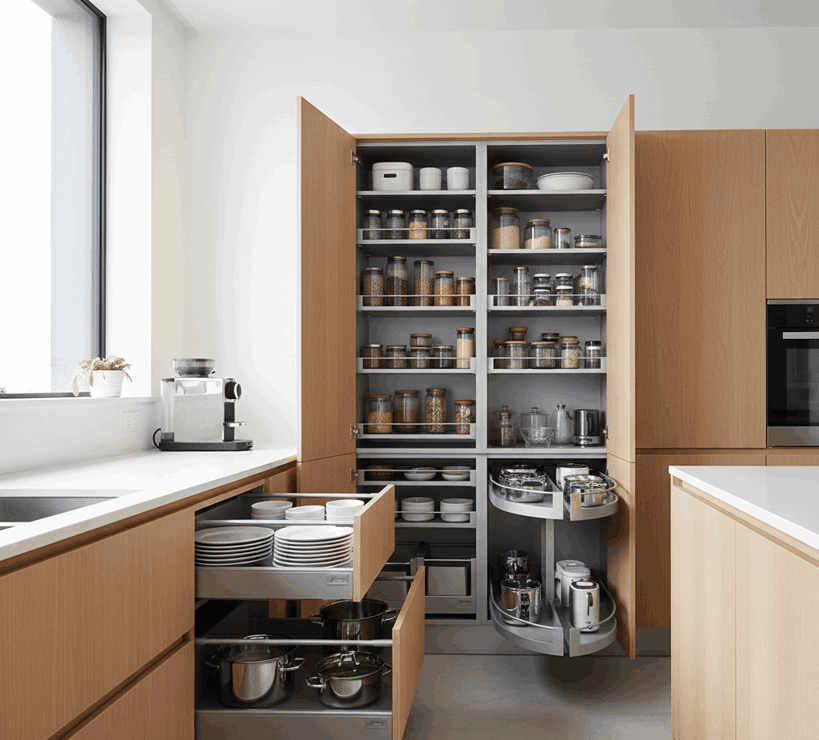
A good kitchen isn’t just about how it looks it’s how it works. Storage optimization is key here. Use vertical space wherever you can, like tall cabinets or shelves. Keep the things you use every day close at hand no one wants to climb over stuff just to grab a coffee mug. Smart placement makes life way easier, trust me.
Hidden Storage That Keeps Kitchens Clean
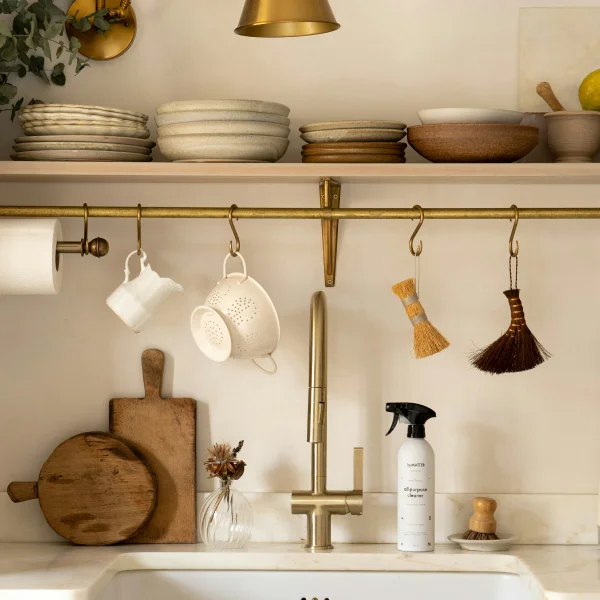
Hidden storage is a game-changer. Pull-out drawers, deep drawers, and clever corner solutions help keep counters clear and clutter out of sight. When everything has its spot, cooking feels less stressful and your kitchen looks tidier without trying too hard.
Pantry Design for Real Life
Pantries can be small but mighty. Even a tiny pantry can be super functional if you organize it well group items, use clear containers, and label stuff so you don’t waste time digging. Walk-in pantries? They’re heaven for big kitchens, giving tons of room for groceries and extra appliances. A well-thought-out pantry makes meal prep smoother and keeps your kitchen running like a dream.
Materials, Lighting, and Ventilation That Support the Golden Rule
Durable Materials That Make Life Easier
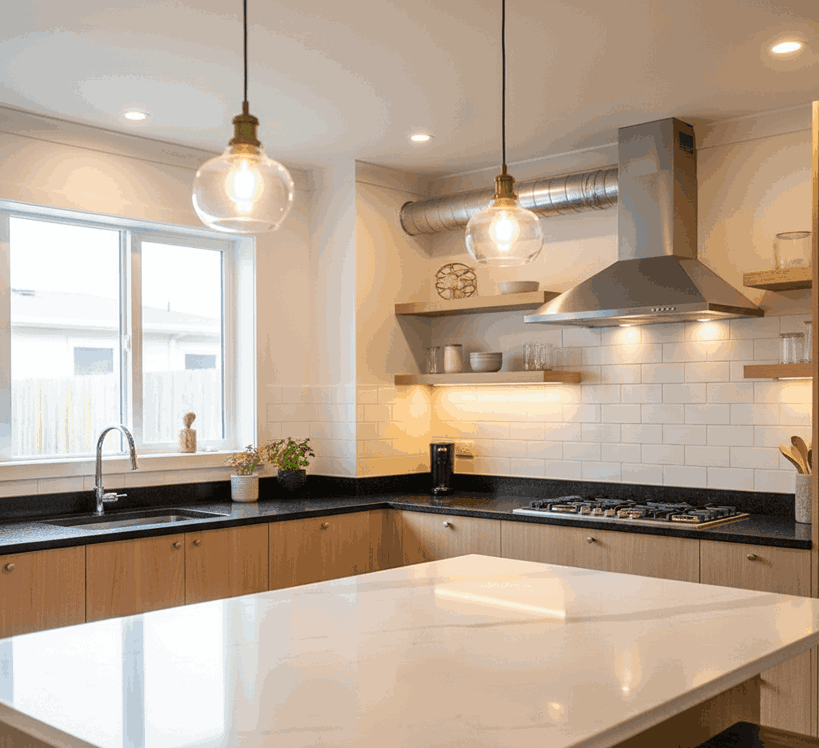
Picking the right materials can save you a ton of headaches later. Quartz countertops and granite countertops aren’t just fancy words they’re tough, easy to clean, and handle all the chopping, spilling, and heat that happens in a real kitchen. Surfaces that stain or scratch easily? Forget it. You want stuff that actually works for daily life, not just looks good in a magazine.
Lighting Layers That Actually Help You Cook
Lighting is more than just making the kitchen look nice. Task lighting over counters helps when chopping or measuring, while ambient lighting gives the room a cozy feel. Accent lighting highlights certain areas or features, and LED kitchen lighting keeps energy bills low and visibility high. Layer your lights smartly, and suddenly cooking doesn’t feel like a struggle in the dark.
Ventilation Is Not Optional
Good air is a lifesaver. A solid range hood takes care of smoke and smells, while an exhaust fan moves extra moisture out so your kitchen doesn’t feel stuffy. And never underestimate natural ventilation open a window or add a skylight, and your kitchen instantly feels fresher. Proper airflow keeps cooking enjoyable and your surfaces lasting longer.
Kitchen Safety and Ergonomics
Kitchen Traffic Flow and Safety
A kitchen that looks nice but makes you bump into stuff all the time? Yeah, that’s no fun. Clear walkways and avoiding tight corners aren’t just picky details they actually make cooking safer and less stressful. You don’t want to be zig-zagging around when you’re carrying hot pans or knives. A smooth kitchen traffic flow keeps everyone moving safely and easily.
Non-Slip Flooring and Child Safety
Floors matter way more than most people think. Non-slip flooring is a simple fix that prevents slips and accidents, especially if you’ve got little ones running around. Materials like textured vinyl, cork, or certain tiles are easy to clean and make the kitchen safer without looking ugly.
Accessible Kitchen Design for Everyone
Kitchens should work for everyone, not just tall adults. Accessible kitchen design means shelves at reachable heights, counters that aren’t too high, and spots for appliances that don’t require stretching or bending too much. Comfort matters, and when your kitchen feels natural to use, cooking actually becomes enjoyable.
Common Kitchen Design Mistakes to Avoid
Too Little Counter Space
You’d be surprised how often people skimp on counter space. It feels fine at first, but when you’re chopping, mixing, and prepping all at once, it gets messy fast. More counters = less stress, trust me.
Bad Appliance Placement
Placing the fridge, stove, or sink in awkward spots is a classic mistake. If you’re constantly walking across the kitchen or bumping into things, cooking stops being fun. Think about your daily moves before picking spots it saves a ton of headaches later.
Ignoring Workflow
Some kitchens look nice but make zero sense when cooking. Ignoring the kitchen workflow slows you down and makes cleanup a pain. Work triangles, zones, and logical layouts aren’t fancy rules they’re lifesavers.
Choosing Looks Over Use
Picking materials or styles just because they look cool? Been there. If your cabinets or counters aren’t practical, the kitchen becomes annoying fast. Function always comes first, then style.
No Storage Planning
Running out of space for pots, pans, and ingredients is maddening. Poor storage design leads to cluttered counters and a chaotic kitchen. Smart cabinetry solutions and hidden drawers make all the difference.
Golden Rule for Small Kitchens vs Large Kitchens
Small Kitchen Design Rules
Small kitchens can be tricky. Every inch counts, so function matters way more than looks. Counters need to be usable, zones should be tight but not cramped, and storage is basically everything. Think pull-out drawers, vertical shelves, and clever pantry hacks small kitchens survive on smart planning. You want a space where you can cook without bumping into yourself.
Large Kitchens Still Need Planning
Big kitchens might feel like a dream, but they bring their own headaches. Distance problems pop up if your fridge is too far from the stove or prep zone, you waste steps. Over-designing is also a risk: too many islands or funky layouts can make a kitchen feel less cozy and more like a maze. Even in large spaces, sticking to the golden rule keeps efficiency high and daily use easy.
Conclusion
The golden rule for kitchen design really comes down to this: function first, style second. A kitchen might look fancy in pictures, but if it slows you down or feels awkward to move in, it’s just not right. Think about how you cook, clean, and store things every day, and plan around that instead of chasing every trend. A good layout, smart storage, and practical lighting make all the difference. Honestly, a kitchen designed with real life in mind just feels… right when you’re in it. Simple, comfy, and easy to use that’s the goal.