If you’ve ever felt like your kitchen’s just too cramped or awkward to move around in, the 3x4 kitchen rule might be exactly what you need. In simple terms, it’s a way to arrange your cooking, cleaning, and storage areas so everything’s within easy reach no more running back and forth or bumping into stuff …
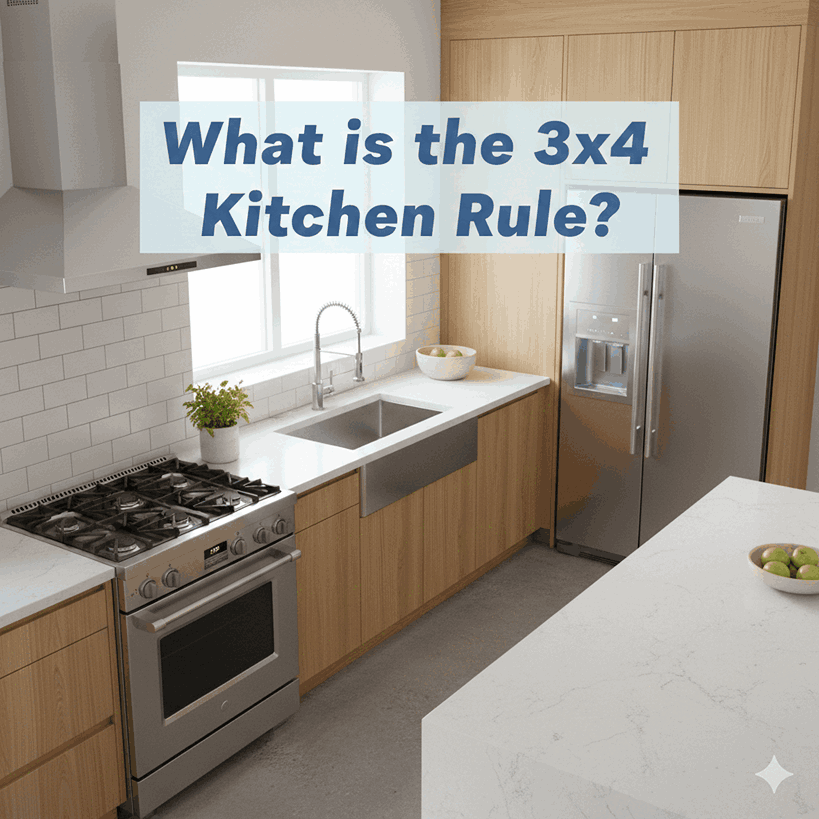

If you’ve ever felt like your kitchen’s just too cramped or awkward to move around in, the 3×4 kitchen rule might be exactly what you need. In simple terms, it’s a way to arrange your cooking, cleaning, and storage areas so everything’s within easy reach no more running back and forth or bumping into stuff while trying to cook. The idea is to make your kitchen flow naturally, whether it’s tiny or got a bit more space. It’s kinda like giving your kitchen a little secret plan so your meals get done faster, and the whole space just feels easier to work in.
Understanding the 3×4 Kitchen Rule
What It Means in Simple Terms
The 3×4 kitchen rule is basically a simple way to get your kitchen set up so everything’s easy to reach. It’s about organizing three main zones: cooking, cleaning, and storage. Imagine your stove, sink, and fridge forming a kind of triangle yep, that’s the classic kitchen triangle idea but this rule just makes sure it all fits neatly and makes sense. Even if your kitchen’s tiny, following this can make it feel way less cramped. You’ll actually be able to move around without bumping into counters or juggling space like a circus act.
Why It Matters
Following this rule isn’t just for looks, it really helps make cooking faster and less annoying. With the zones set right, you’re walking less and spending more time actually cooking instead of chasing utensils or ingredients. It keeps your kitchen organized, too, no more cluttered counters or a pile of random stuff near the sink. Plus, it’s safer and more comfortable. Like, you’re scrambling eggs and don’t wanna trip over the trash can, right? This little setup tweak can make your kitchen feel way smoother and actually enjoyable to work in.
How the 3×4 Rule Impacts Your Kitchen Layout
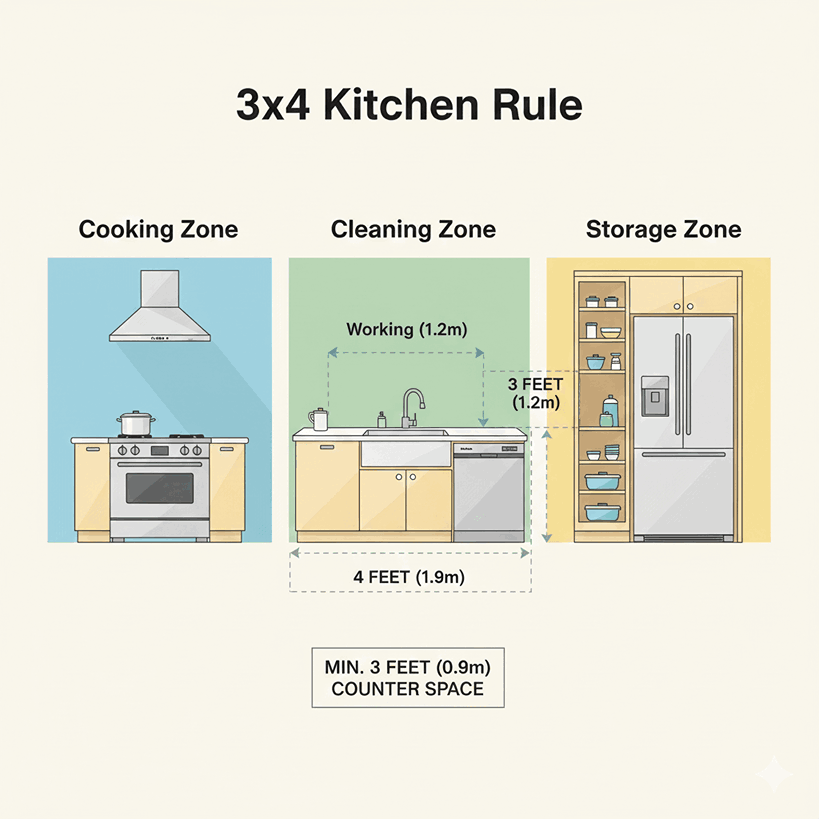
The Three Functional Zones
When you follow the 3×4 rule, your kitchen basically splits into three main zones so everything’s easier to reach:
- Cooking area: stove, oven, and your main prep counter. This is where all the magic happens.
- Cleaning area: sink, dishwasher, and trash. You want this spot to be practical, so washing up feels less like a chore.
- Storage area: fridge, pantry, and cabinets. Everything has a place, and you won’t be hunting for ingredients mid-cooking.
Breaking it down like this makes the kitchen feel organized, and you’ll notice your workflow actually makes sense instead of running around like a chicken.
Recommended Counter and Island Distances
Getting the spacing right is super important; otherwise, even the best layout feels cramped. Here’s a quick guide you can follow:
| Kitchen Feature | Recommended Space |
| Counter to island | 30–36 inches (or around 5 feet for bigger kitchens) |
| Sink to stove | Minimum 36 inches |
| Counter space per zone | At least 4 feet |
| Island dimensions | Usually 3–4 feet wide, depending on your kitchen size |
People often ask, “Is 36 inches enough space between counter and island?” Honestly, for most kitchens it works, but if you’ve got a bigger layout, 5 feet feels way more comfortable. The main idea is that you want enough room to move, open drawers, and not bump into someone else if you’ve got multiple cooks.
Applying the 3×4 Kitchen Rule in Different Kitchen Types
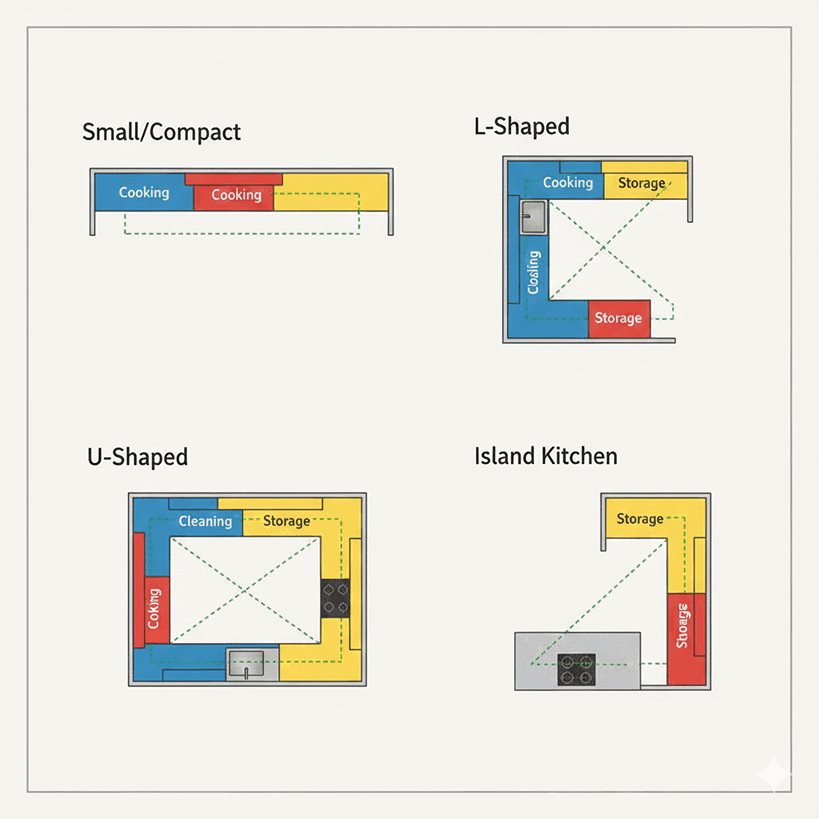
Small / Compact Kitchens
Tiny kitchens can be tricky, but the 3×4 rule actually helps a lot. You wanna make every inch count, so think vertical storage and multi-functional appliances. Pull-out counters, foldable prep surfaces, or a stove with built-in burners can make a world of difference. Even a small tweak, like moving your trash closer to the cleaning zone, can save steps. Honestly, it feels way less stressful when you’re cooking breakfast and don’t have to juggle everything at once.
L-Shaped, U-Shaped, and Island Kitchens
- L-shaped kitchens are awesome for corners, they naturally guide your movement and keep cooking, cleaning, and storage zones within reach.
- U-shaped kitchens give you tons of counter space. Just make sure you’re sticking to the 3×4 layout so everything isn’t too spread out.
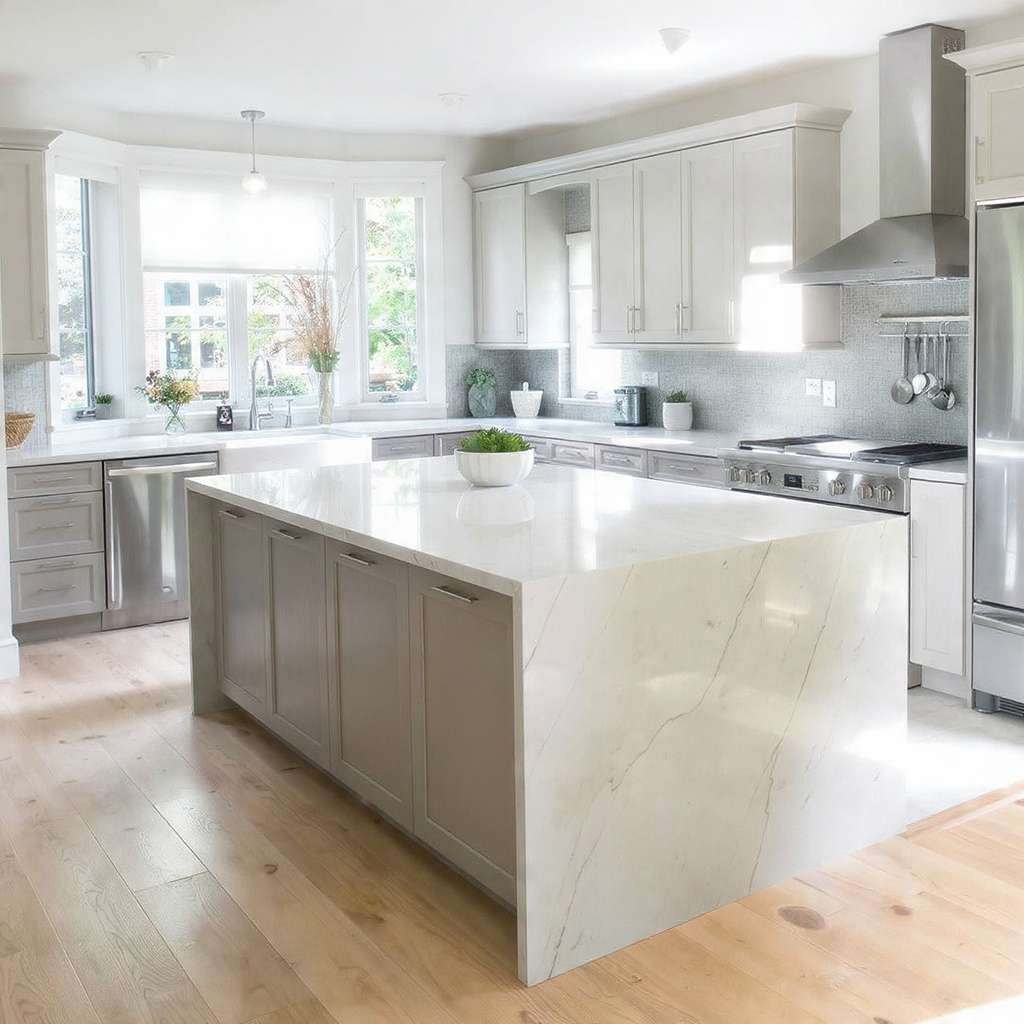
- Island kitchens are fun but need some breathing room. Keep at least 5 feet between your island and counters so you can open cabinets and move around without bumping into things.
Open-Plan Kitchens
Big, open kitchens can feel overwhelming if you don’t set zones. Even in a spacious layout, you can use the 3×4 rule to create functional pockets for cooking, cleaning, and storage. Islands work well here, and having multiple zones makes it easy for more than one person to cook without chaos. Bonus tip: good visibility and clear pathways make the space feel effortless, and honestly, it just makes cooking way more enjoyable.
Common Mistakes to Avoid in 3×4 Kitchen Design
Even with a solid plan, it’s easy to mess up a kitchen layout if you’re not careful. Here are some of the biggest mistakes people make:
- Cramping the space or crowding zones: You really don’t wanna be elbowing the fridge while chopping veggies or bumping into the trash can mid-prep. Give yourself room to move.
- Ignoring the kitchen triangle: Stove, sink, fridge, they gotta be in a flow that actually makes sense. Skipping this just makes cooking way more tiring.
- Poor lighting in prep areas: Dark corners are a pain. Make sure you can see what you’re doing, or you’ll end up slicing onions in the shadows.
- Not measuring counter to island distances properly: That tiny miscalculation can make your kitchen feel way too tight. Remember, 30–36 inches is usually comfy, 5 feet if you’ve got space.
- Forgetting ergonomics: Counter height, reach to stove or sink, all that stuff matters. Cooking should feel easy, not like a workout.
Benefits of Following the 3×4 Kitchen Rule
Efficiency & Workflow
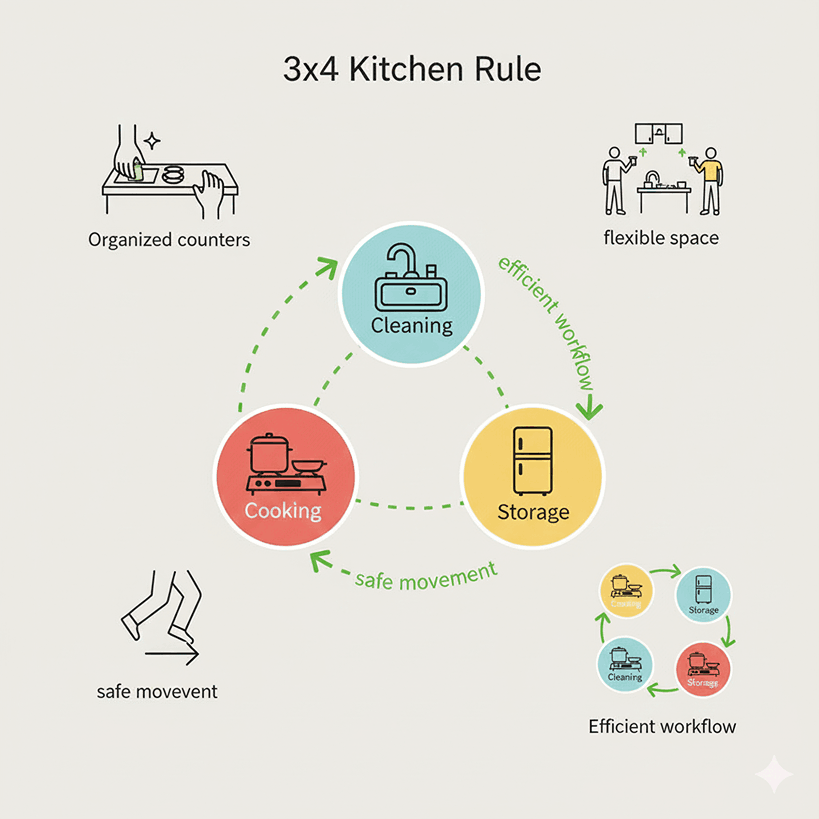
One of the biggest perks of the 3×4 rule is how much smoother cooking gets. You’re not running across the kitchen, grabbing things; you move naturally from stove to sink to fridge. It actually saves time and makes meal prep feel way less chaotic. Honestly, it’s kinda nice when you’re making breakfast and everything’s right there without having to hunt for utensils.
Better Organization & Less Clutter
With clearly defined zones, everything has a proper place. Counters stay cleaner, drawers aren’t stuffed, and you can actually see what you’re working with. Cleaning up afterward becomes way easier, and your kitchen feels less stressful overall.
Flexibility & Safety
This setup works whether your kitchen is tiny or huge. Keeping zones clear and space in between counters and islands helps prevent accidents less bumping into people, no tripping over a trash can, and safer cooking in general.
Potential Resale Value Boost
A kitchen that’s ergonomic, functional, and well-organised isn’t just nice for you it’s appealing to future buyers too. Layouts that follow this rule feel smart and thought-out, which can actually help if you ever decide to sell your home.
Step-by-Step Guide to Implement the 3×4 Kitchen Rule
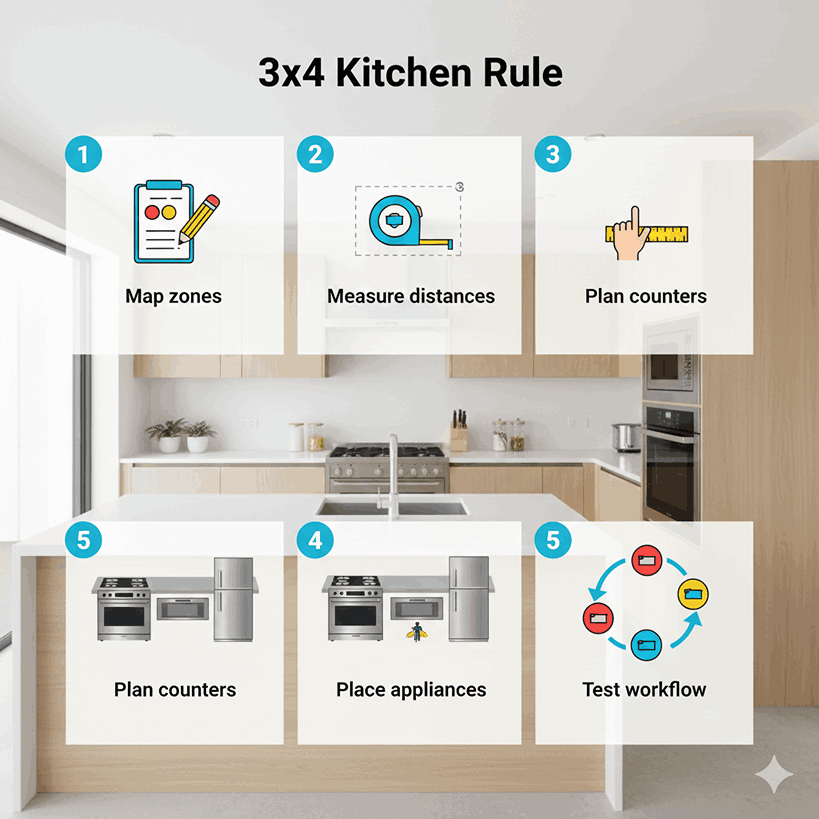
Step 1 – Map Your Zones
First things first, figure out your three main zones: cooking, cleaning, and storage. Grab some paper, sketch it out, or use a simple kitchen design app. Just seeing it on paper helps a ton you can spot if something’s awkwardly placed before you start moving counters around.
Step 2 – Measure Distances Carefully
Next, get out your tape measure. Check distances like counter to island, sink to stove, and aisle space. People often wonder, “Is 30 inches enough?” or think about the distance between the kitchen counter and island in cm. Tiny mistakes here can make the kitchen feel cramped, so double-check.
Step 3 – Plan Counter & Storage Space
Aim for at least 4 feet of counter space per zone. Think about pull-out drawers, pantry spots, and clever storage solutions that make life easier. Even a small tweak, like adding a slide-out cutting board near the stove, can save a lot of stress when cooking.
Step 4 – Incorporate Appliances & Ergonomics
Place your stove, fridge, and dishwasher so moving between zones feels smooth. Check heights, reach, and how the doors swing. You want cooking to feel natural, not like a mini obstacle course every time you chop veggies.
Step 5 – Test the Workflow
Finally, walk through the kitchen. Pretend you’re making breakfast, doing dishes, or just moving around. If it feels cramped, adjust. Sometimes, a small nudge of a counter or a slight reposition of an appliance makes a huge difference in real-life flow.
Conclusion
So, now you know what is the 3×4 kitchen rule it’s all about: keeping your cooking, cleaning, and storage zones organized for a smooth, efficient, and safe workflow. Following this rule not only makes your kitchen less chaotic but also helps with organization and flexibility, whether your space is tiny or huge. Take your time planning, think about ergonomics, and don’t forget to check practical details like kitchen counter height to make sure everything feels just right while cooking.
FAQs
Q1: What exactly is the 3×4 kitchen rule?
It’s basically a guideline to set up your kitchen so the cooking, cleaning, and storage zones are all easy to reach. Think stove, sink, and fridge forming a kind of triangle, with enough counter space in each zone. It makes cooking smoother and the kitchen less chaotic.
Q2: Is 36 inches enough space between the counter and island?
For most kitchens, 36 inches works fine, but if you’ve got a bigger layout, a little more space around 5 feet is way more comfortable. You wanna be able to move freely without bumping into stuff.
Q3: How wide should a kitchen island be?
It depends on your kitchen size, but generally 3–4 feet wide is comfy. Enough space to prep, store, or even sit at, without making the area feel crowded.
Q4: Can the 3×4 rule work in small kitchens?
Absolutely! The idea is to maximise every inch, use pull-out counters, multi-functional appliances, and clever storage so even a tiny kitchen flows well.
Q5: Minimum distance between sink and stove?
Ideally, at least 36 inches. It gives you enough prep space between cleaning and cooking zones so you’re not constantly elbowing yourself while making dinner.
Q6: Does it apply to open-plan kitchens?
Even in big, open kitchens, you can use the 3×4 rule to create clear zones. Islands or separate prep areas help maintain workflow and keep things organized.
Q7: What counter space do I need per zone?
Aim for at least 4 feet per zone. More is better if you’ve got the space, but even this minimum makes a big difference for prepping, cooking, and storing stuff efficiently.
Q8: How can I avoid common kitchen remodel mistakes?
Plan ahead, measure distances carefully, follow the triangle principle, consider ergonomics, and don’t skimp on lighting. Basically, think about flow and comfort, not just how it looks.