Kitchen counter height for wheelchair users is crucial for comfort and safety. The ideal range is usually 28–34 inches, with adjustable counters being even better. This guide helps you choose the right height, plan layouts, and make daily kitchen tasks easier for wheelchair users. Why normal kitchen counters don’t work from a wheelchair Most kitchens …
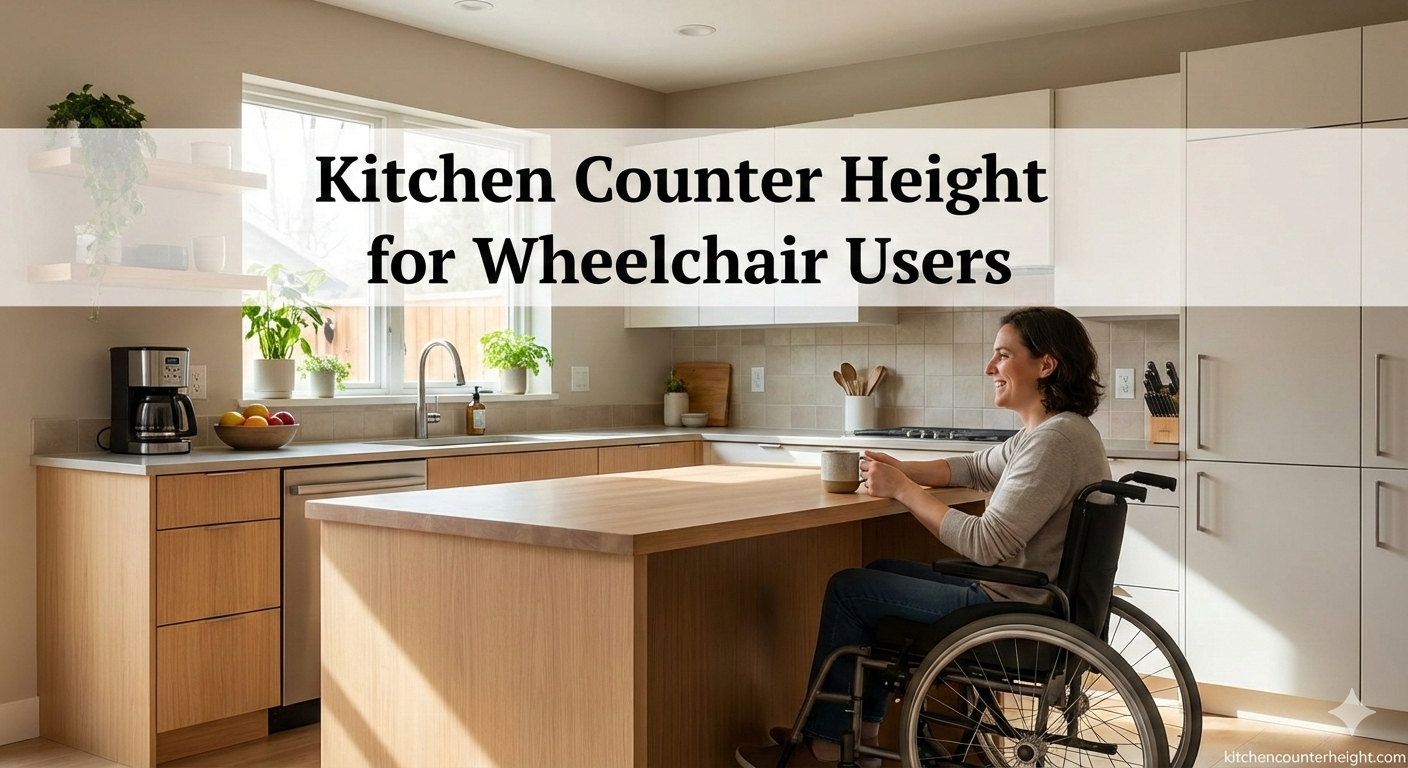

Kitchen counter height for wheelchair users is crucial for comfort and safety. The ideal range is usually 28–34 inches, with adjustable counters being even better. This guide helps you choose the right height, plan layouts, and make daily kitchen tasks easier for wheelchair users.
Why normal kitchen counters don’t work from a wheelchair
Most kitchens are built for standing people. That’s the real issue.
A standard 36-inch counter looks fine on paper, but from a wheelchair, it feels awkward and tiring. Your shoulders lift, your wrists bend weirdly, and simple tasks start to feel heavy.
Things that usually go wrong:
- Arms get tired fast
- You can’t get close enough to the counter
- Hot pans feel risky
- Washing dishes becomes uncomfortable
A kitchen should feel natural to use. If you’re fighting the counter every time, the height is wrong. Simple as that.
Kitchen Counter Height for Wheelchair Users: Ideal Range
Let’s talk clear measurements without confusion.
Recommended height in inches
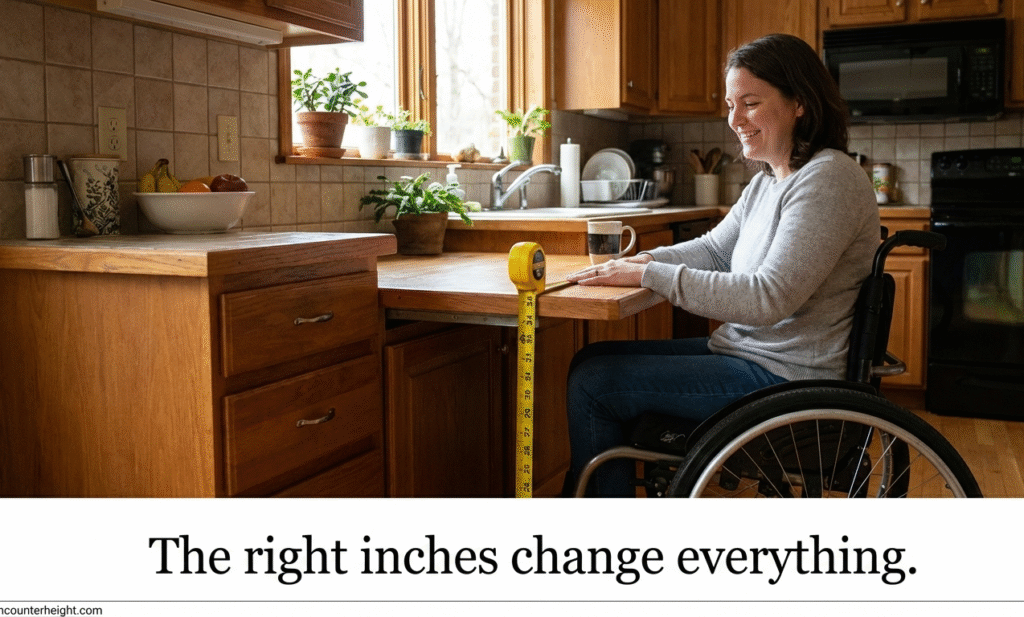
Most wheelchair users are comfortable in this range:
- 28–30 inches → shorter users or lower wheelchair seats
- 31–34 inches → average wheelchair height
- Adjustable (27–36 inches) → shared kitchens or changing needs
There’s no “perfect” number for everyone. Body size, chair height, and arm reach all matter. For a broader look at optimal counter heights for all kitchens, see this guide
Why one fixed height often fails
Wheelchairs aren’t all the same. Neither are people.
Two users can sit side by side and still need different counter heights. That’s why adjustable systems exist. They cost more, yes, but they save regret later.
Knee & Leg Clearance for Wheelchair Kitchen Counter Height
This part gets skipped a lot, and it shouldn’t.
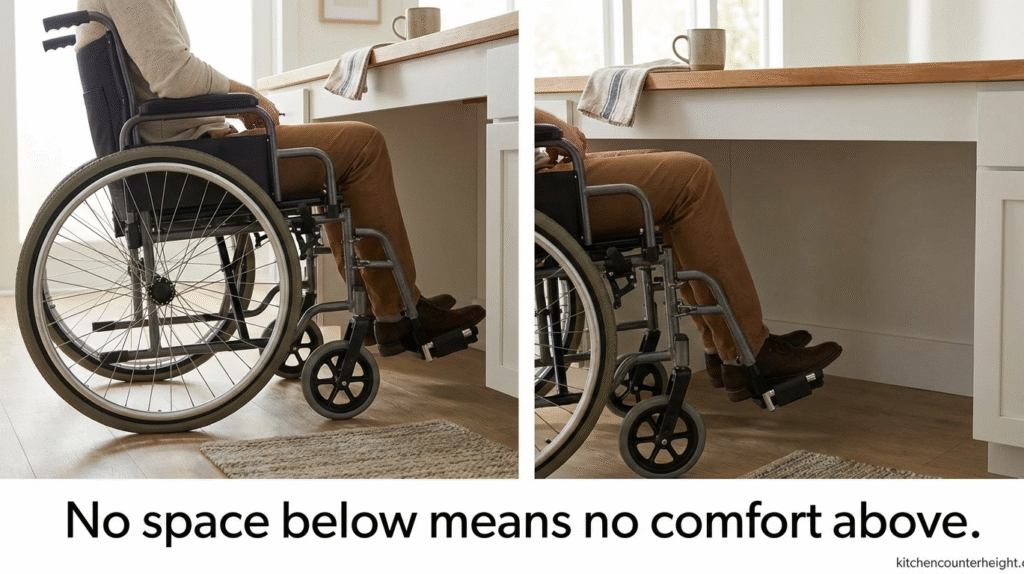
You can lower a counter, but if there’s no space under it, it’s still useless.
Minimum clearance that actually works
Under the counter, aim for:
- Height: about 27 inches clear
- Depth: at least 19 inches
- Width: 30 inches or more
This space lets knees fit without twisting or backing away.
Toe space matters more than people think
Wheelchair footrests stick out. If the cabinet toe kick is too shallow, you can’t roll close enough. That’s when backs start bending and shoulders start hurting.
A deeper toe space makes a big comfort difference.
Sink & Cooktop Height Tips for Wheelchair Kitchen Counter Height
This is where many kitchens mess up.
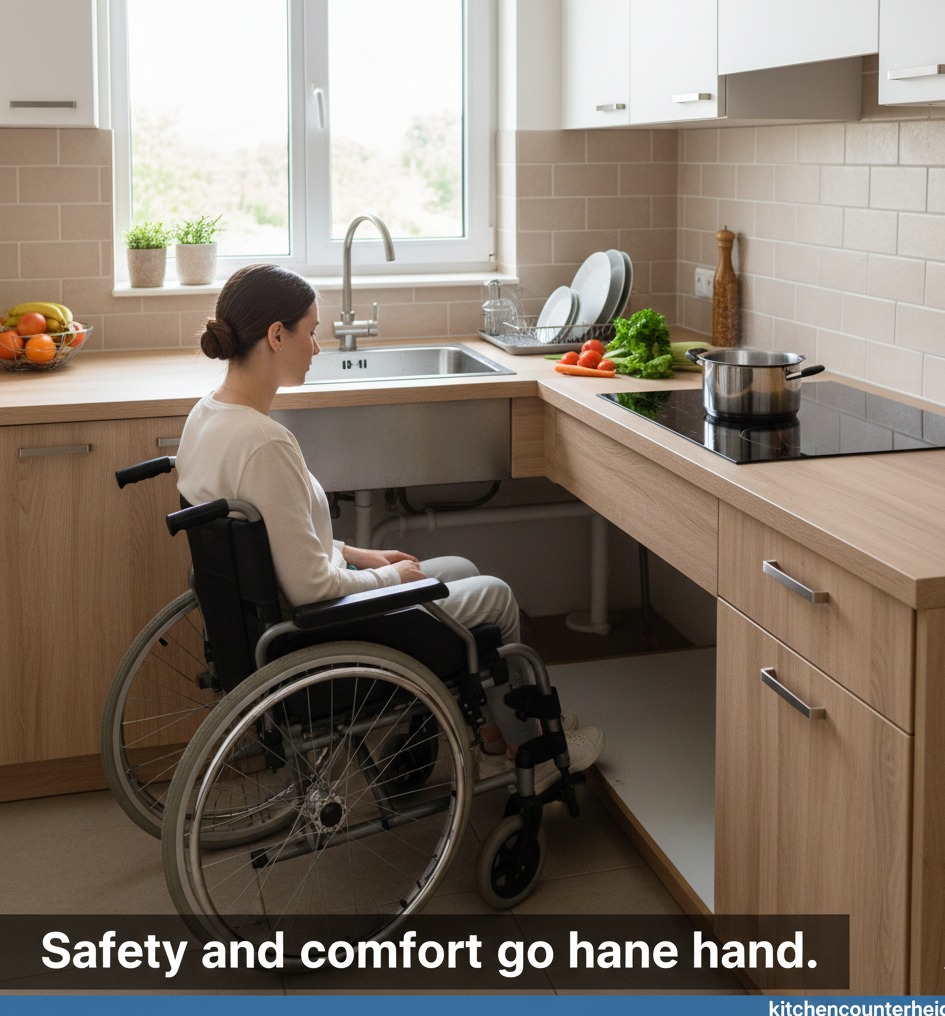
Sink depth problems
Deep sinks look nice, but for wheelchair users:
- Knees hit the bottom
- Plumbing blocks leg space
- You sit too far back
A shallow sink with plumbing pushed to the rear works much better.
Simple sink tips
- Insulated pipes underneath (no burned legs)
- Flat front edge
- Single-handle faucet (easy grip)
Washing dishes shouldn’t feel like a workout.
Cooktop height and safety (this really matters)
Cooking from a seated position changes everything.
Best cooktop setup
- Same height as the counter
- Flat surface (no raised burners)
- Front controls, not back
Why induction is safer
Induction cooktops cool down fast. No open flame. Less risk of burns. You can slide pots instead of lifting them, which is huge when sitting.
Gas hobs look traditional, but they’re not friendly here.
Fixed vs Adjustable Kitchen Counter Height for Wheelchair User
Let’s keep this real. Both have pros and cons.
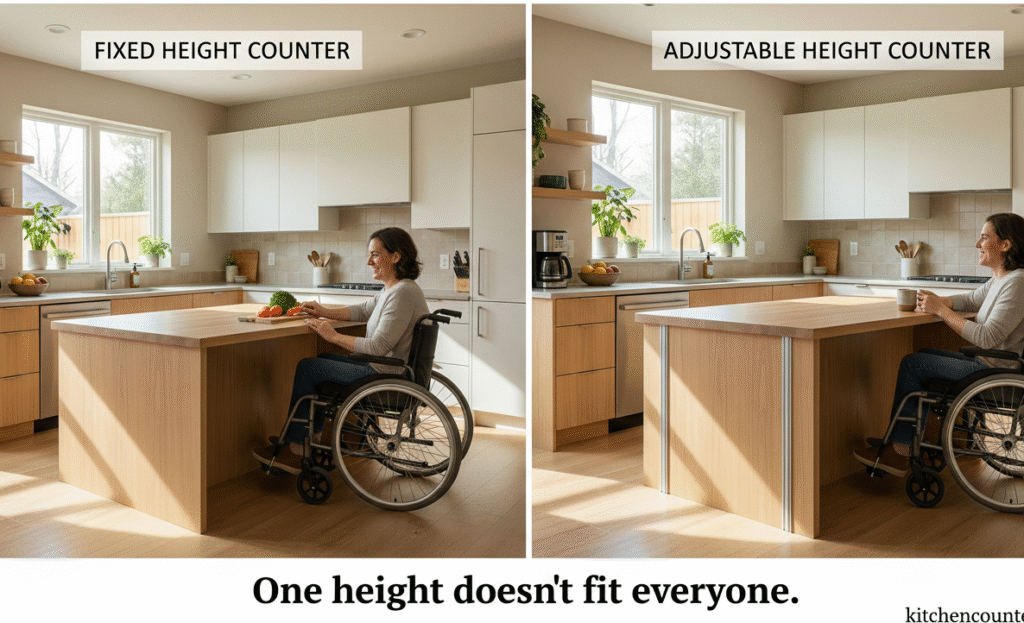
Fixed-height counters
Pros
- Cheaper
- Simple install
- Less maintenance
Cons
- Only suits one user
- Hard to change later
Adjustable counters
Pros
- Works for different people
- Adapts as needs change
- Best for shared kitchens
Cons
- More expensive
- Needs proper installation
If budget allows, adjustable is the smarter long-term choice. If not, choose a fixed height that feels comfortable after testing.
Best kitchen layouts for wheelchair users
Layout affects comfort as much as height.
Layouts that work well
- L-shape: easy reach, less movement
- U-shape: everything close, fewer turns
Straight-line kitchens can work too, but spacing matters.
Space between counters
Aim for at least 60 inches between opposite counters. This allows smooth turning without bumping into doors or drawers.
Tight kitchens feel stressful. Open ones feel usable.
Storage that still works with lower counters
Lower counters often mean less cabinet space. That’s okay if storage is planned smartly.
Better base storage ideas
- Deep drawers instead of cabinets
- Pull-out shelves
- Rolling carts under counters
Wall storage tips
- Pull-down shelves
- Sliding doors (not swinging)
- Keep daily items at chest level when seated
If you have to stretch or bend hard, storage is badly placed.
Common mistakes people regret later
I’ve seen these mistakes more than once.
Choosing height without testing
Numbers help, but sitting at a mock counter helps more. Always test before fixing anything.
Ignoring appliance height
An oven placed too low becomes dangerous. Wall ovens at seated chest height work better.
Designing only for today
Bodies change. Needs change. A little flexibility now saves money later.
Remodeling an existing kitchen
Not every kitchen needs a full rebuild.
Easy changes
- Lower one counter section
- Remove base cabinets under sink
- Swap knobs for handles
Harder (but possible) changes
- Full counter replacement
- Plumbing relocation
- Adjustable systems install
Even small changes can improve daily comfort a lot.
Small safety upgrades that make a big difference
These don’t cost much but help a lot:
- Rounded counter edges
- Non-slip surfaces
- Heat-resistant landing areas near stove
- Easy-grip handles
Comfort comes from details, not just measurements.
ADA guidelines
ADA gives minimum standards, not perfect comfort.
It suggests lower work surfaces and clear knee space. That’s a starting point, not the finish line. Real comfort often needs a bit more adjustment than rules say.
Follow guidelines, but listen to the user’s body first.
A real-life note (from experience)
I’ve noticed something over the years. People who go “just a little higher” often regret it. Even one extra inch can strain shoulders over time. When in doubt, go slightly lower. It’s easier to raise things later than live with daily discomfort.
FAQs
1. What is the best height range for wheelchair kitchen counters?
Most users are comfortable between 28 and 34 inches, depending on chair height and reach.
2. Can a normal kitchen be adapted for wheelchair use?
Yes. Even lowering one work area and adjusting storage can help a lot.
3. Are adjustable counters really worth it?
For shared kitchens or long-term use, yes. They offer flexibility fixed counters can’t.
4. Should sinks be lower than counters?
Not always lower, but they must be shallow with clear space underneath.
5. What’s the biggest design mistake people make?
Designing by numbers only, without testing comfort in real life.
Final thoughts
Choosing the right setup isn’t about trends or rules. It’s about daily comfort, safety, and ease. When the height feels natural, cooking becomes enjoyable again. That’s the real goal of kitchen counter height for wheelchair users, a space that works with the body, not against it.