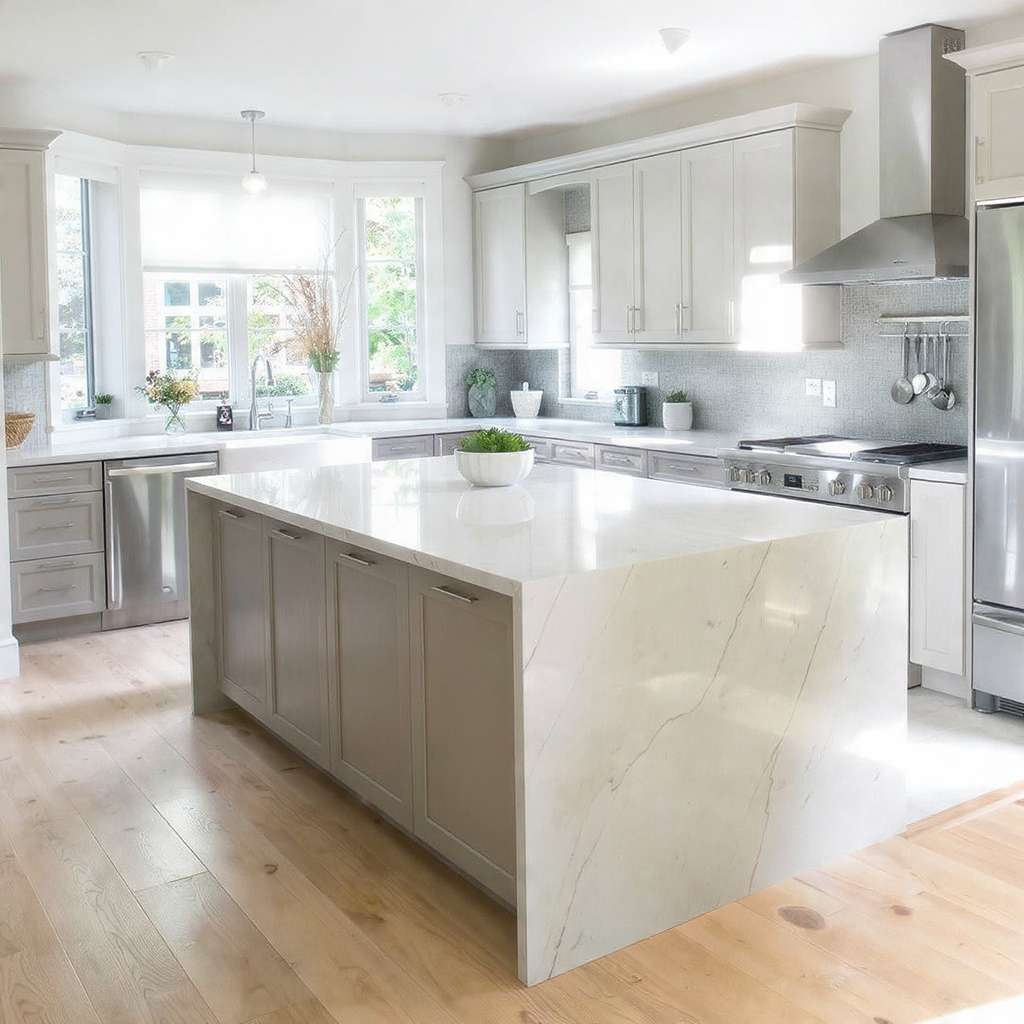
The window over the sink is the one you look through more than any other in the house. You stand there to wash dishes, fill a kettle and rinse vegetables, often several times a day. So it is worth getting two things right: how high the window sits above the counter, and how well the …
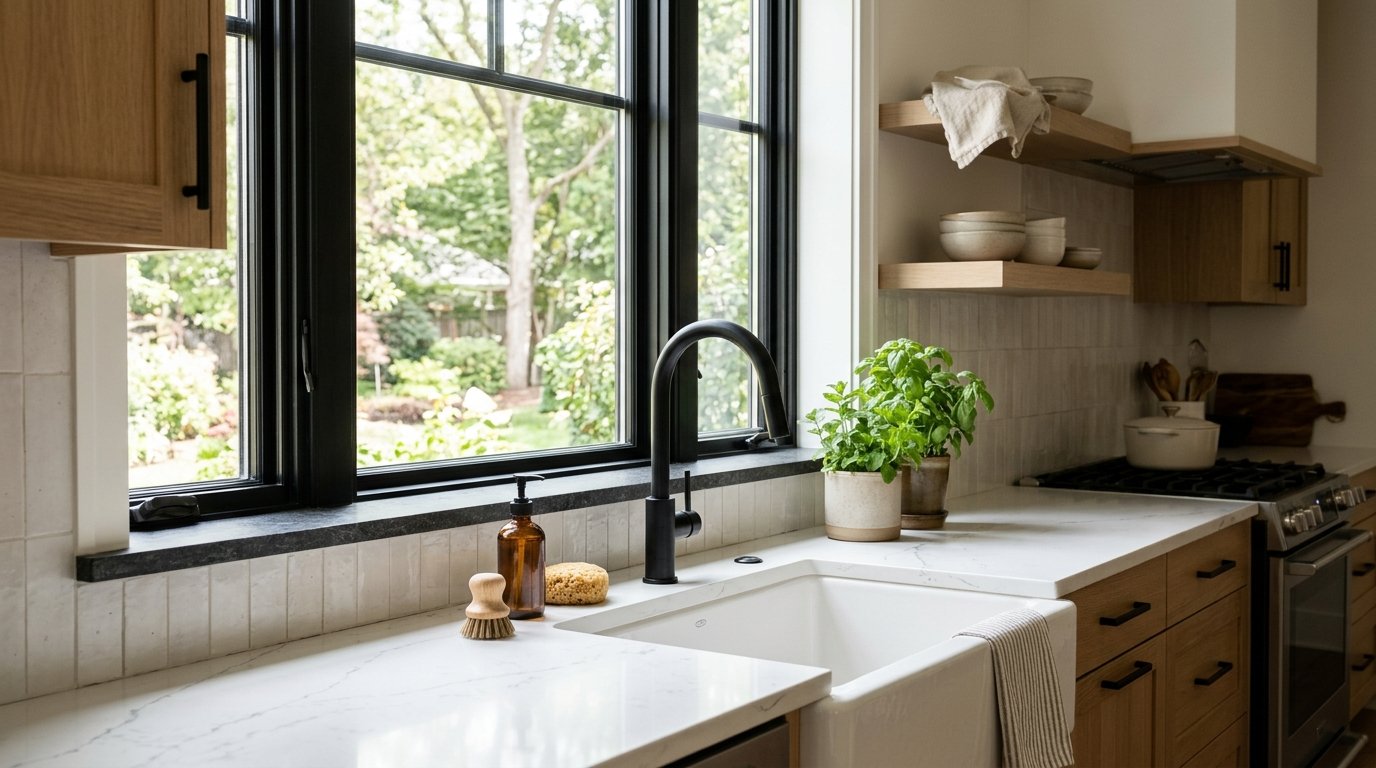

The window over the sink is the one you look through more than any other in the house. You stand there to wash dishes, fill a kettle and rinse vegetables, often several times a day. So it is worth getting two things right: how high the window sits above the counter, and how well the sill holds up to the water that ends up on it. Let’s start with the height.
The numbers to start from
A standard kitchen counter is 36 inches from the floor. Most countertops get a backsplash of about 4 inches when the counter is stone or quartz, or a full-height tile backsplash that runs up to the window.
That is why so many kitchen windows start somewhere between 3 and 6 inches above the counter, which puts the bottom of the glass at roughly 40 to 42 inches from the floor. It clears the backsplash, leaves room for the faucet, and keeps the view at a comfortable level when you stand at the sink.
| Sill height above the counter | What it looks like | Watch out for |
|---|---|---|
| Flush with the counter (0 in) | Window acts as the backsplash, very open and modern | Water sits right on the sill, so the sill must be stone or another waterproof material |
| 3 to 6 in | The most common choice; clears a 4 in backsplash | A tall pull-down faucet may block a window that opens inward |
| 8 to 12 in | Room for a ledge with herbs or a soap dish | Harder to reach the latch over a deep sink |
| More than 12 in | Feels like a standard wall window | You lose most of the view while working at the sink |
Check the faucet and the window type
Before you settle on a height, measure your faucet. Many pull-down and gooseneck faucets stand 15 to 20 inches tall. If the window swings inward or the sash slides up into the path of the faucet, you will hit it every time.
This is also why casement windows are so popular over sinks. You open them with a crank at the bottom of the frame, so you never have to lean over a basin full of dishes and push a heavy sash up.
Pro tip: Stand at the sink with a tape measure before you order anything. Note your eye level, the reach to the latch, and the height of the faucet. Those three numbers decide the window better than any rule of thumb.
The part nobody plans for: water on the sill
Here is what happens in real kitchens. Water splashes off the faucet. Wet sponges and dish soap bottles sit on the sill. Steam from the dishwasher and the stove condenses on the cold glass and runs down. Over a few years, all of that water ends up in one place: the bottom of the window frame.
If that sill is painted wood, it is the first piece of the house to rot. The paint cracks at a corner, water gets into the end grain, and the wood softens from the inside while the surface still looks fine.
Signs your kitchen window sill is in trouble:
- Paint peeling or bubbling along the bottom rail or sill
- Dark staining or black spots in the corners
- A gap opening up between the sill and the counter or backsplash
- Wood that feels soft or spongy when you press it with a screwdriver tip
- A musty smell under the sink or behind the backsplash
How to keep the sill from rotting
A few habits and design choices make a big difference:
- Use a waterproof sill. The easiest fix during a remodel is to run the countertop material, granite, quartz or solid surface, up and over as the window sill. Many fabricators can cut it from the same slab.
- Seal the seam. Keep a clean bead of kitchen and bath silicone where the sill meets the backsplash and the frame. Redo it when it yellows or pulls away.
- Keep the paint whole. A wood sill is safe as long as the paint film is intact. Touch up chips right away, especially at the corners.
- Do not store wet things there. Move the sponge, the soap and the plant saucer to a tray or a caddy.
- Run the range hood. Venting steam while you cook keeps condensation off the glass in the first place.
If the wood is already soft
Small, local rot is very fixable. The soft wood is cut out, the area is treated with an epoxy consolidant, filled, shaped and painted. When the damage runs deeper, a carpenter can splice in a new section of sill or rebuild the bottom of the frame without replacing the whole window.
The key is not to wait. Once rot reaches the framing below the window, the job gets much bigger. If you live in a humid climate, a company that specializes in wood window repair can probe the sill and tell you whether it needs a patch, a new section or a full frame. That is usually far less work than a new window, and it lets you keep the window size you planned your kitchen around.
FAQ
How high should a kitchen window be above the counter? Most kitchen windows sit 3 to 6 inches above the counter, which clears a standard 4 inch backsplash. Measured from the floor, that puts the bottom of the window at about 40 to 42 inches.
Can a kitchen window sit right at counter height? Yes, it can. It works well as a design feature, but the sill needs to be stone, quartz or another waterproof material, because water will sit on it every day.
What is the best window type over a kitchen sink? Casement windows are the easiest to open over a deep sink. Sliders also work well and leave the faucet clear.
Why does my kitchen window sill keep rotting? Water from the sink, wet sponges and condensation keep the wood damp. If the paint or caulk has a gap, water soaks into the wood. Rot that keeps coming back usually means the seal around the sill needs attention, not just the wood.
Be the first to read my stories
Get Inspired by the World of Interior Design

rankthrive3@gmail.com
Fahad is the co-founder of Kitchen Counter Height, a home design blog built around practical ideas that actually work. He’s been creating and marketing content online for over 5 years, helping homeowners make smart choices for modern kitchens. With a background in digital marketing and a love for interior design, Fahad turns complex design concepts into simple, actionable tips. His work focuses on kitchen planning, counter height guides, and real-world home improvement insights. When he’s not writing, you’ll usually find him exploring new design trends or optimizing brand strategies.