Choosing the right kitchen countertop backsplash pairing comes down to balance. If your countertop has bold veining or a busy pattern, a simple backsplash usually works well. A plain countertop, on the other hand, gives you more room to play with colorful tiles or interesting patterns. The best backsplash and countertop combinations also consider cabinet …
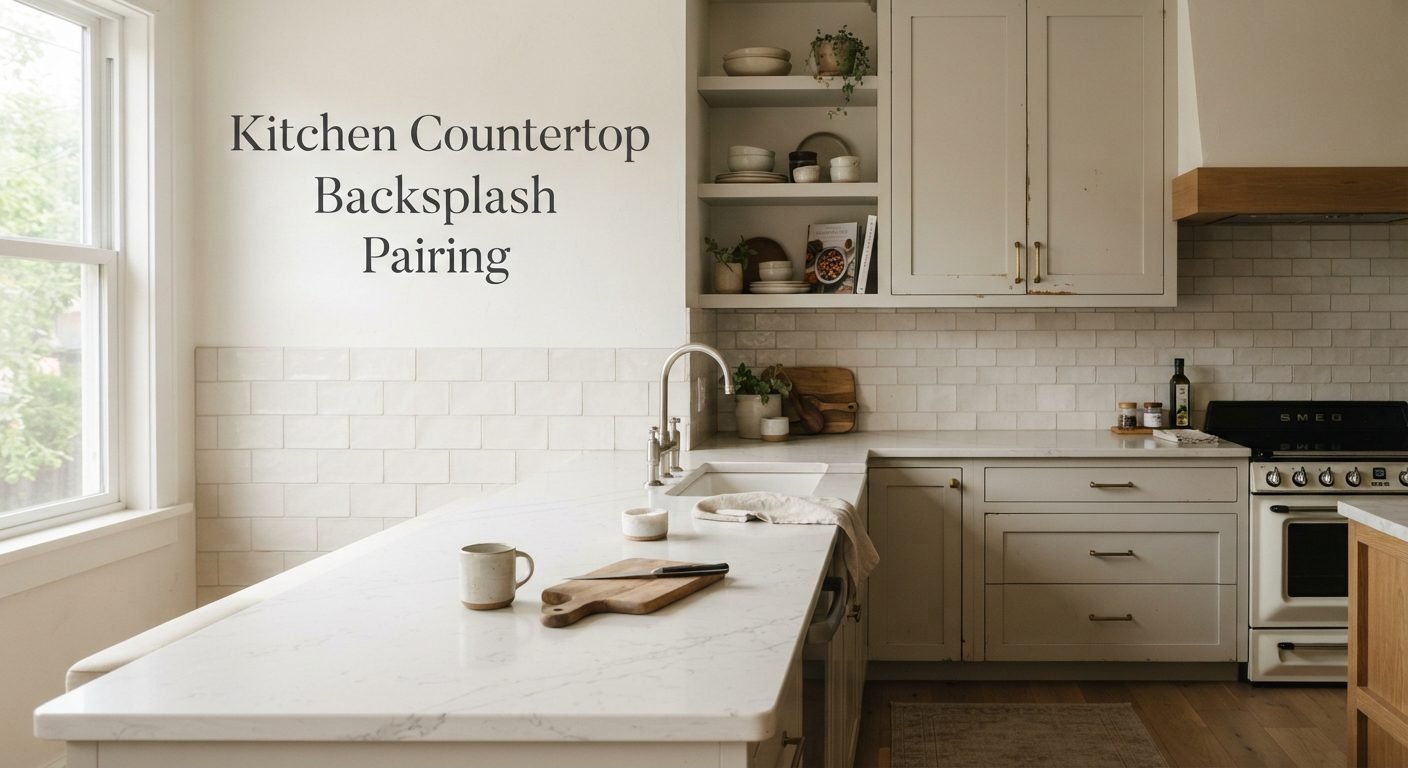

Choosing the right kitchen countertop backsplash pairing comes down to balance. If your countertop has bold veining or a busy pattern, a simple backsplash usually works well. A plain countertop, on the other hand, gives you more room to play with colorful tiles or interesting patterns. The best backsplash and countertop combinations also consider cabinet colors, material, and kitchen lighting. Before buying anything, compare samples together in your own kitchen. A small difference in color or undertone can change the whole look.
How to Match a Kitchen Countertop With a Backsplash
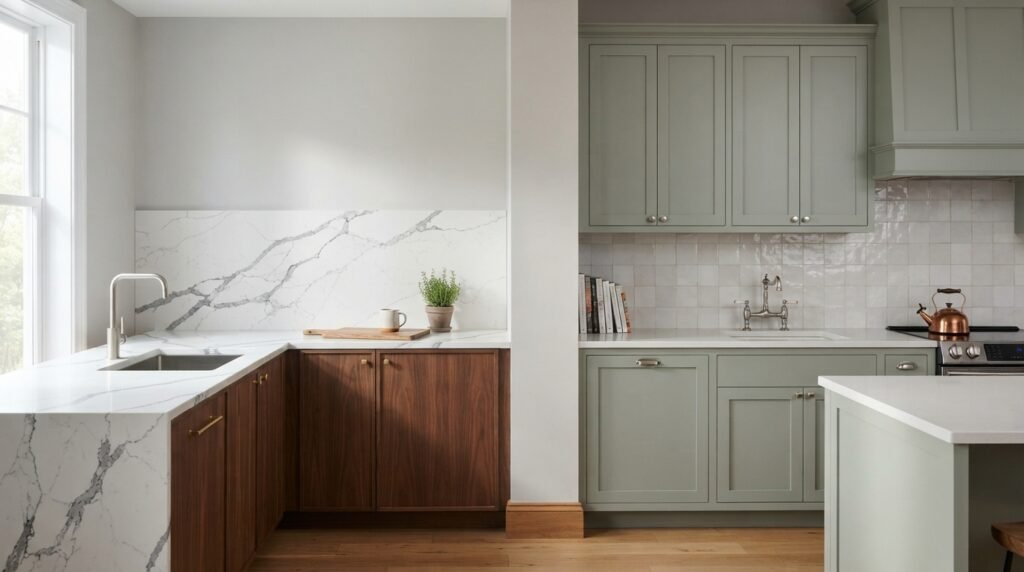
The easiest way to get good countertop and backsplash design ideas is to look at the two surfaces as a pair. You don’t need them to match perfectly. Instead, focus on balance, color, pattern, and finish.
Let One Surface Be the Focal Point
If your countertop has bold veining or a busy stone pattern, keep the backsplash simple. A plain subway tile or one with subtle patterns can let the countertop stand out without making the kitchen feel too busy.
The opposite works too. A simple white or gray countertop gives you room for a colorful or patterned backsplash. That’s where visual balance really matters.
Match Warm and Cool Undertones
Don’t judge colors by their names alone. Two white surfaces can look completely different. Check the warm and cool undertones before choosing your tile.
For example, cream and ivory usually work well with warm countertops, while cooler gray or blue-white shades can suit a cool-toned stone. Good color matching is more about undertones than finding an exact color match.
Choose Between Low and High Contrast
For a calm kitchen, try low-contrast designs, such as a light countertop with a backsplash in a similar shade. This can make the space feel clean and open.
Want more definition? A light backsplash with a dark countertop creates stronger contrast and gives the kitchen a sharper look. Neither approach is wrong—it depends on the feel you’re after.
Balance Texture and Finish
Finish matters just as much as color. A polished countertop can look great beside a matte tile, while glossy tile can add light and movement to a kitchen with a honed stone surface.
If both materials are already busy, keep the finishes simple. A textured backsplash works best when the countertop has a quieter pattern, so each surface has its own place in the design.
Countertop and Backsplash Combinations by Material
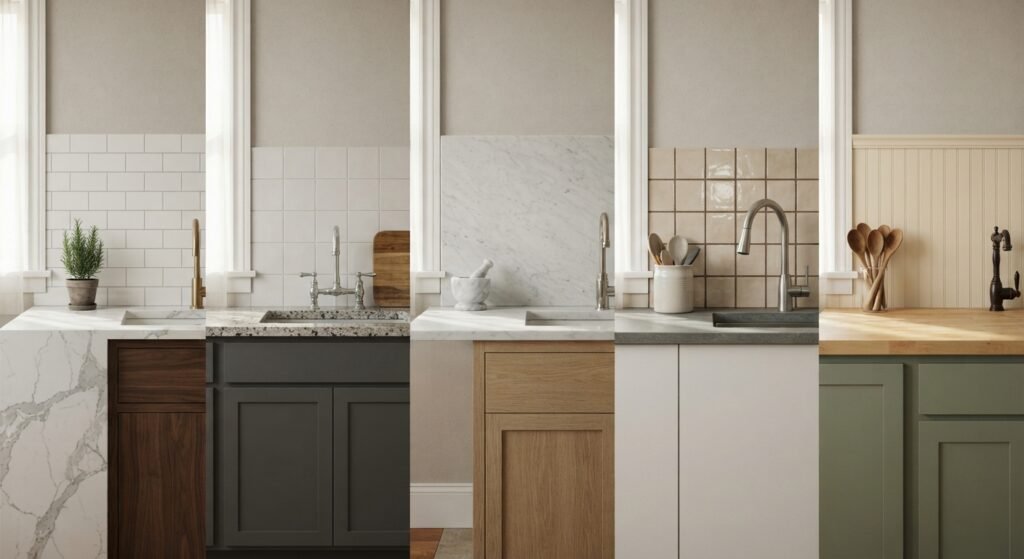
The countertop material usually gives you a good starting point for choosing the backsplash. Some surfaces already have a lot of color and movement, while others are much easier to pair with patterns.
Quartz Countertops
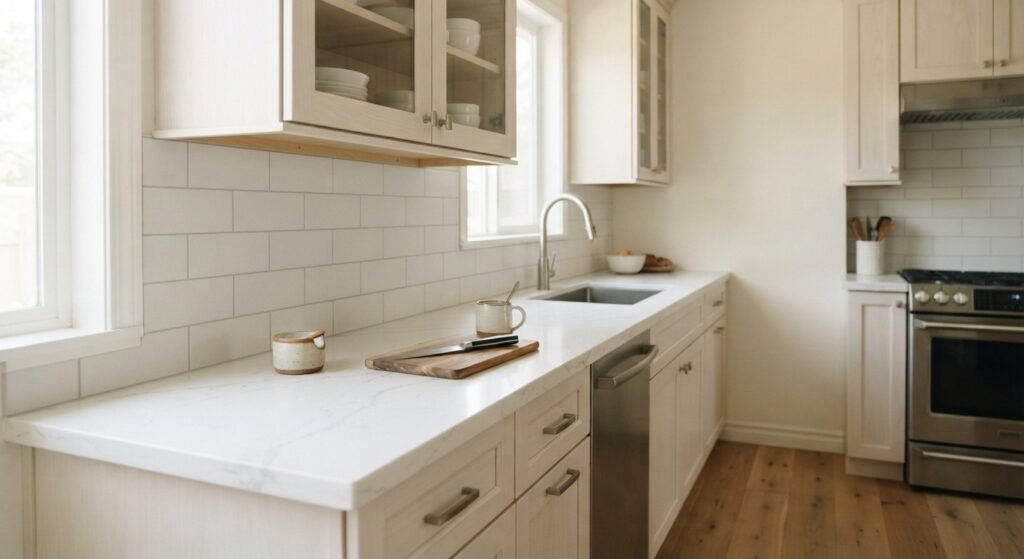
For backsplash ideas for quartz countertops, first check whether you have solid quartz or veined quartz. Solid quartz gives you more freedom to use patterned tile, while veined quartz usually looks better with a quieter backsplash.
For a quartz countertop backsplash pairing, try simple subway tile, soft neutral ceramic, or a backsplash that picks up one color from the quartz. Avoid adding another strong pattern if the countertop already has heavy veining.
Granite Countertops
Granite comes with a lot of granite color variations, so the backsplash should work with the colors already in the stone. A simple subway tile is an easy choice for busy granite.
If you want a little more detail, a tonal mosaic using one or two colors from the granite can tie everything together. What I’d avoid is a highly patterned backsplash beside heavily speckled granite—it can get messy pretty fast.
Marble and Quartzite Countertops
Both marble countertops and quartzite countertops can have strong veining, so let that be the main feature when possible. A plain ceramic tile or natural stone backsplash in a related shade can work really well.
If the stone has dramatic veins, don’t compete with it using another bold pattern. Keep the backsplash quieter and let the countertop do the talking.
Laminate Countertops
Laminate countertops are available in almost every style, including stone-look laminate, wood looks, and solid colors. This makes them pretty flexible.
For a budget-friendly remodel, a simple budget-friendly backsplash such as ceramic subway tile can give laminate a cleaner, more finished look. Try not to pair a fake-stone countertop with an overly realistic stone backsplash, as the two textures can look mismatched.
Butcher Block and Concrete Countertops
Wood countertops naturally bring warmth, so backsplashes in cream, beige, earthy green, or other warm tones can fit nicely. Simple ceramic or handmade-look tile works especially well.
With concrete countertops, you can go in a different direction. White tile, dark grout, or simple geometric patterns can suit an industrial kitchen design. I’d keep the rest of the finishes fairly simple so the concrete doesn’t feel cold or disconnected from the room.
Kitchen Countertop and Backsplash Color Combinations
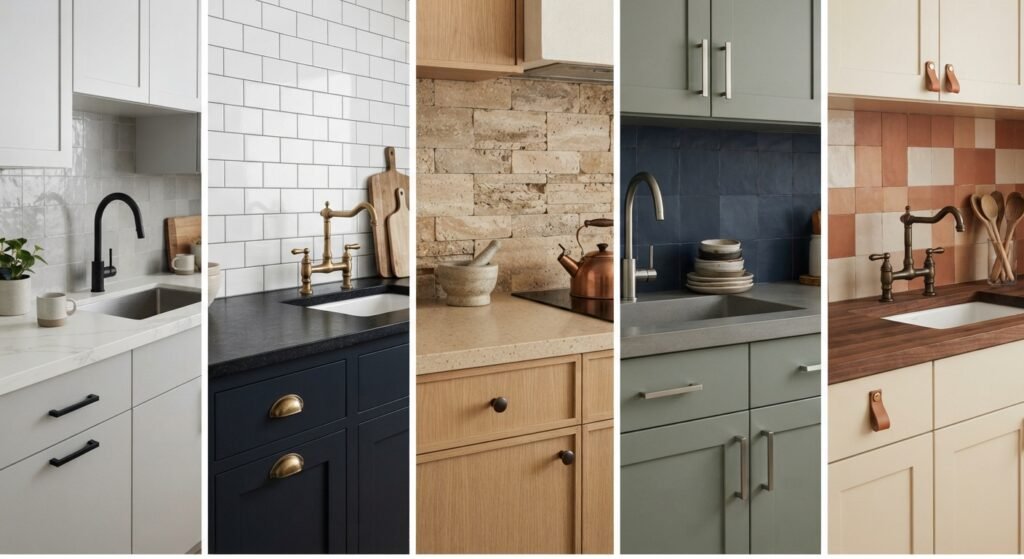
Color is where a kitchen can really change. You don’t have to match every surface exactly. In fact, a little contrast usually makes the space feel more natural.
White Countertops With Gray or Dark Backsplashes
White countertops are easy to work with. A soft gray backsplash keeps things calm, while a black backsplash creates stronger contrast.
For example, white cabinets with a gray tile backsplash and brushed nickel hardware can feel clean without being too plain. If you go with black tile, try white or light wood cabinets and simple black hardware.
Black Countertops With White or Cream Tile
Black countertops already bring plenty of weight to the kitchen, so lighter tile can balance them nicely. White subway tile is a classic choice, while a cream backsplash gives the room a slightly warmer feel.
White cabinets with black countertops and brass hardware is one simple combination that works well. For cream tile, light oak cabinets and bronze or brass hardware can soften the look.
Beige Countertops With Natural Stone
Beige countertops pair naturally with warm neutrals. A natural stone backsplash with beige, tan, or soft brown shades can make the whole kitchen feel warm and connected.
Try cream cabinets with brushed brass hardware for a softer look. If you have darker wood cabinets, keep the stone backsplash lighter so the room doesn’t feel too heavy.
Gray Countertops With White, Blue or Green Tile
Gray countertops can go either warm or cool, so check the cool undertones before choosing your tile. White keeps the kitchen simple, while a navy backsplash adds more depth. For something less expected, emerald green tile can bring in some color without taking over.
White or light-gray cabinets work nicely here. Matte black hardware suits darker tile, while chrome or brushed nickel works well with white backsplash tile.
Wood-Tone Countertops With Earthy Colors
With butcher block, lean into the natural warmth instead of fighting it. Terracotta, cream, muted green, and other earthy shades can create a relaxed earthy kitchen palette.
Light cream cabinets with brass hardware can keep the space bright. If you have darker cabinets, choose a lighter backsplash and simple hardware so the warm wood tones don’t make the kitchen feel too dark.
How to Choose the Right Backsplash Tile
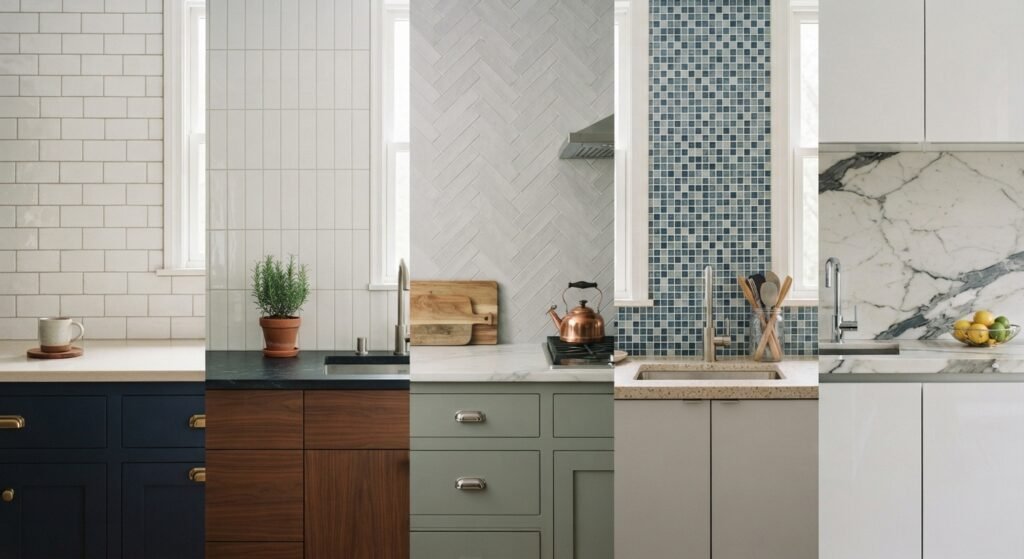
The tile itself isn’t the only thing to think about. Its size, layout, and pattern can change how the countertop looks. A small kitchen can feel busier with tiny patterned tiles, while larger tiles often give the room a cleaner look.
Subway Tile and Stacked Tile
A subway tile backsplash is a safe choice when you want a classic kitchen style. The standard brick layout adds a little movement without becoming the main feature.
For something cleaner, try stacked tile with straight horizontal or vertical lines. It works especially well beside a countertop with noticeable veining.
Herringbone and Geometric Tile
A herringbone backsplash adds more movement because of its angled pattern. It’s a good option when the countertop is fairly simple and needs a little extra detail.
Geometric tile can make a stronger statement. If you’re using a patterned backsplash, I’d keep the countertop fairly quiet so both surfaces aren’t competing for attention.
Mosaic, Ceramic and Glass Tile
A mosaic backsplash can bring several colors into the kitchen, which makes it useful when you want to connect the countertop with the cabinets.
Ceramic tile is available in loads of sizes and styles, while a glass tile backsplash can reflect light and make a darker kitchen feel brighter. Just be careful with very small mosaics if the countertop already has a busy pattern.
Full-Slab Backsplash
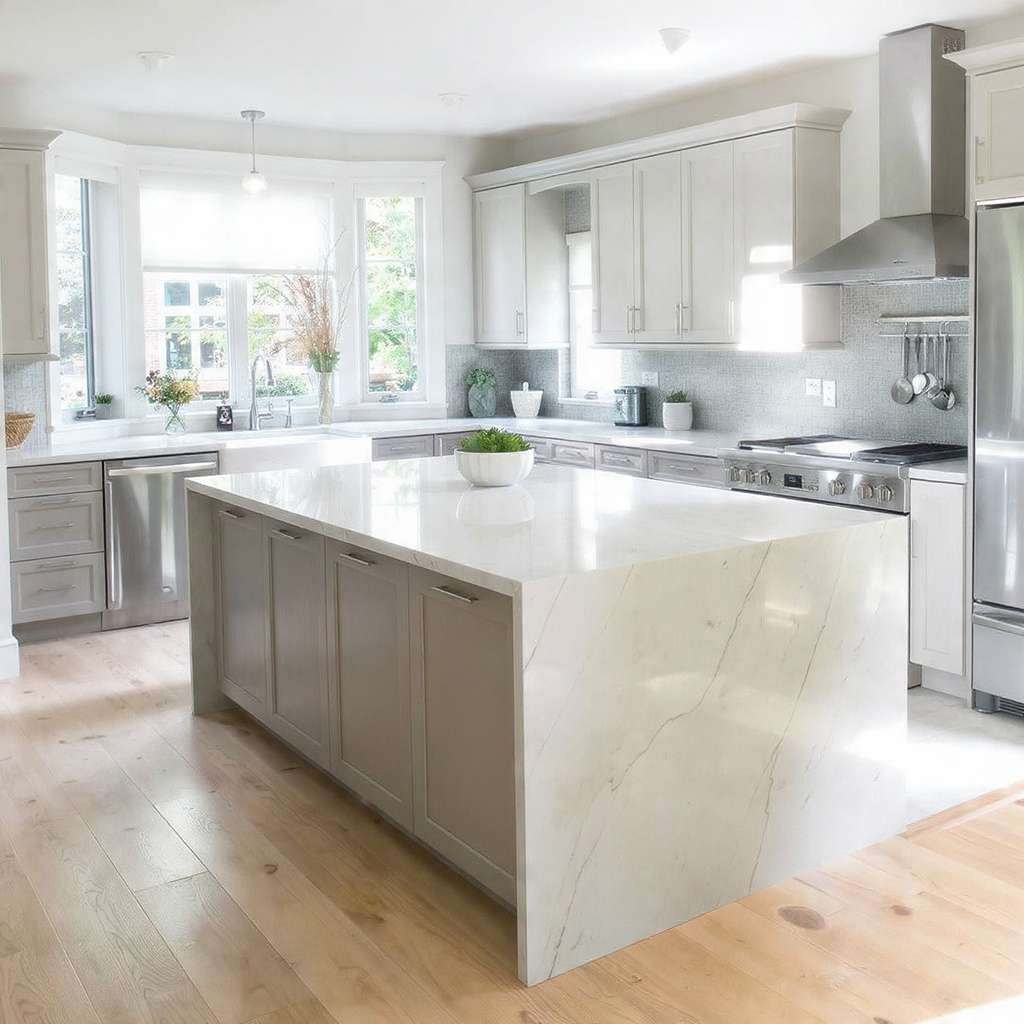
A full-slab backsplash creates a much more continuous look because there are fewer visual breaks. A quartz slab backsplash can work particularly well when you want the countertop and wall to feel like one surface.
The main benefit is the minimal grout lines, which keeps the design clean. This approach looks especially good with marble, quartz, or quartzite that has strong veining, since the pattern can flow naturally from the counter up the wall.
How Grout, Cabinets and Lighting Affect the Pairing
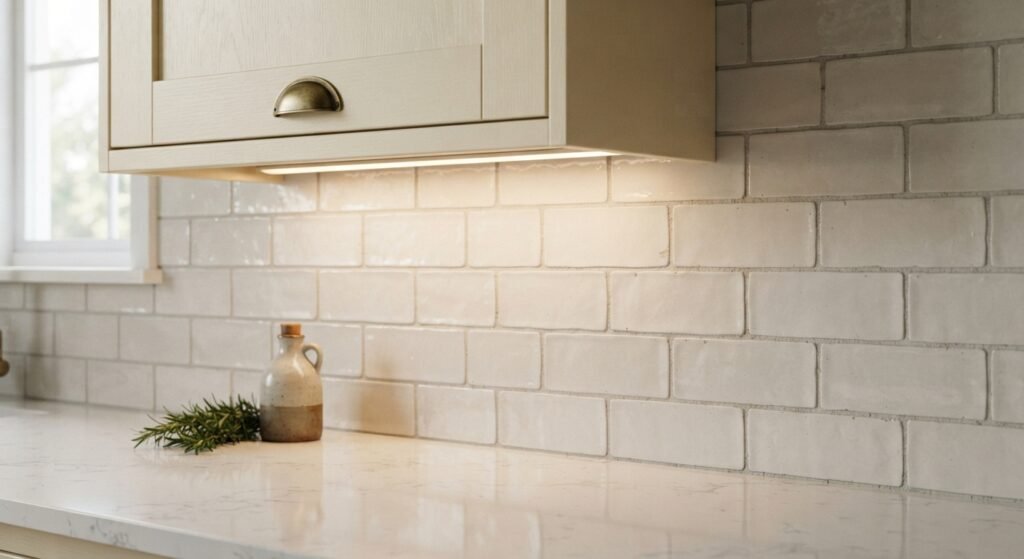
The backsplash doesn’t work on its own. Grout color, cabinets, flooring, hardware, and lighting can all change how the countertop and tile look together. It’s worth checking the whole setup before making a final choice.
Matching or Contrasting Grout Color
Your grout color can either blend into the tile or make each tile stand out. Matching grout creates a cleaner look, while darker grout adds more tile contrast and makes the grout lines easier to see.
For busy countertops, a grout shade close to the tile usually keeps things calmer. With plain tile, a contrasting grout can add some extra detail without changing the backsplash itself.
Coordinating Cabinets, Flooring and Hardware
Look at the whole room before choosing your tile. Good cabinet color coordination doesn’t mean everything has to be the same color. Pick one or two shades that can repeat across the room and build your kitchen design palette around them.
Your kitchen hardware matters too. Brass can warm up cream and beige tones, while black or brushed nickel can work nicely with gray, white, and cooler colors.
Testing Colors Under Kitchen Lighting
Don’t trust a small store sample alone. Take your countertop and backsplash samples home and place them next to the cabinets, flooring, and hardware.
Check them in the morning, afternoon, and at night with your under-cabinet lighting switched on. Natural light can make colors look brighter, while warm bulbs can pull out yellow or beige tones. Cool lighting may make whites and grays appear bluer.
Also check the reflectivity of glossy tile. It can look completely different when light hits it from another angle. If you’re unsure, leave the samples in your kitchen for a day or two before deciding. It’s a small step, but it can save you from an expensive mismatch later.
Common Countertop and Backsplash Matching Mistakes
Even good materials can look wrong together if they’re chosen separately. When matching backsplash to countertops, always look at the actual samples side by side.
One common mistake is using competing patterns. A heavily veined countertop with a busy patterned backsplash can make the kitchen feel crowded. Clashing undertones are another problem, especially when one surface is warm and the other is noticeably cool.
Too much contrast can also become distracting. Don’t forget about grout, either. The wrong grout shade can change the whole appearance of the tile.
How to Test Samples Before Making a Final Decision
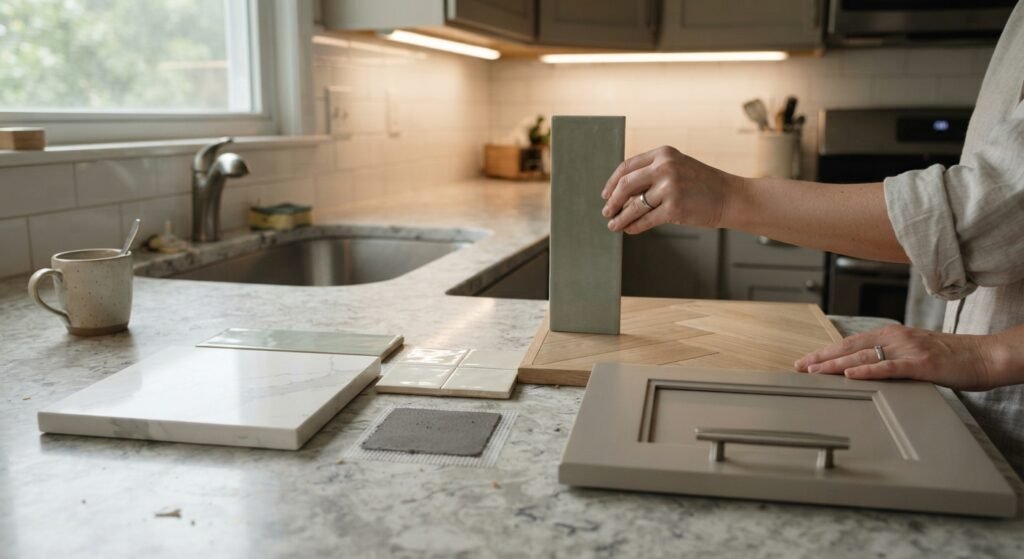
Once you’ve narrowed down your countertop and backsplash ideas, get real material samples instead of relying only on photos.
Place the samples side by side, then hold them vertically against the wall as they would actually appear in the kitchen. Check them during the day and again in the evening under your kitchen lighting.
Bring in cabinet and flooring samples too. Look at everything together and see whether the colors fit your overall kitchen design palette.
Frequently Asked Questions
Should a backsplash match the countertop or cabinets?
It doesn’t have to match either one exactly. Usually, it’s easier to choose a backsplash that connects the countertop and cabinets through a shared color or undertone.
Should the backsplash be lighter or darker than the countertop?
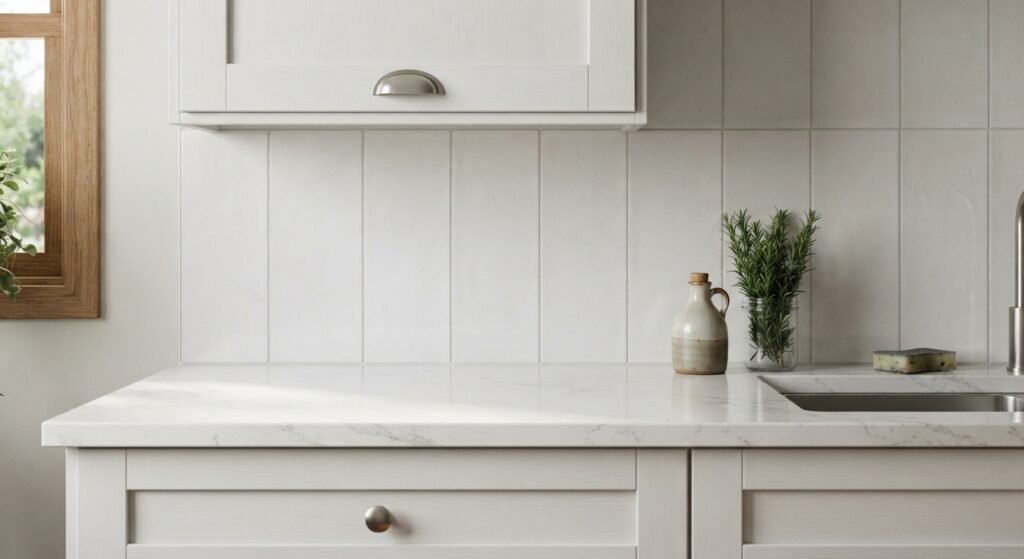
Either can work. A lighter backsplash can make a dark countertop feel less heavy, while a darker backsplash can add depth to a light countertop. Think about the overall contrast you want.
What backsplash works best with white quartz?
Simple ceramic or porcelain tile works well with white quartz. Subway tile is an easy choice, but you can also use a soft gray, beige, or lightly patterned backsplash if the quartz is mostly plain.
Can you use the same material for the countertop and backsplash?
Yes. Using the same stone for both can create a clean, continuous look. A full-slab backsplash is especially useful when you want fewer grout lines and a more seamless appearance.
What backsplash is easiest to clean?
Large-format ceramic or porcelain tile with fewer grout lines is generally easier to maintain. Glass tile can also be easy to wipe clean, but the grout still needs regular attention.
How do you choose a grout color?
For a subtle look, choose grout close to the tile color. If you want the tile pattern to stand out, use a contrasting shade. Before deciding, test the grout with the actual tile since it can look different once it dries.
Create a Balanced Kitchen Design
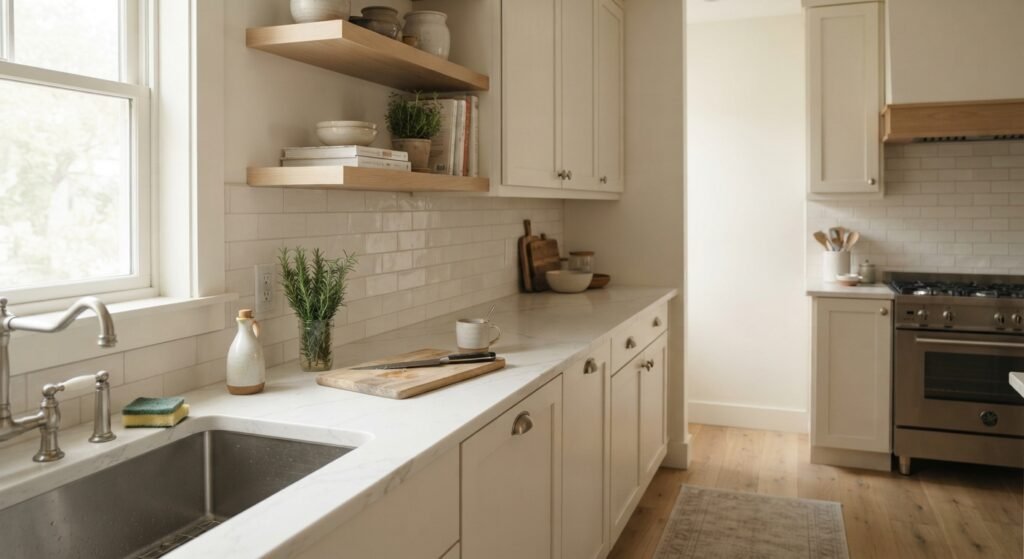
A good kitchen countertop backsplash pairing doesn’t mean every surface has to match. Start with the countertop, decide which surface you want to stand out, then build the rest around it. Pay attention to undertones, tile pattern, grout, cabinet colors, and lighting too.
Before you buy anything, put your samples together and check them in your actual kitchen. Good countertop and backsplash color matching is mostly about finding colors and textures that feel right together. Once those pieces work, your kitchen design palette usually comes together much easier.